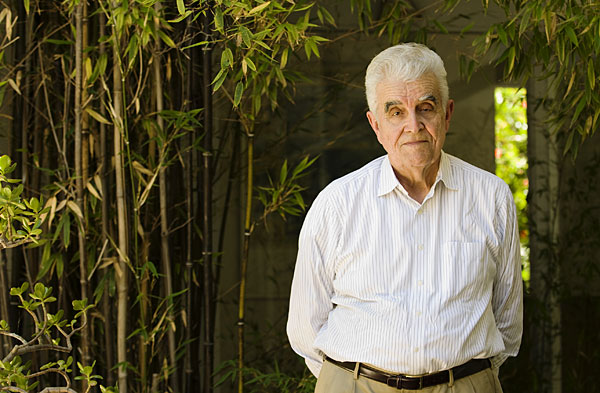
Photo Credit: Linda A. Cicero / Stanford News Service APPLY HERE One of the most influential 20th century Catholic thinkers, René Girard transformed our understanding of culture, religion, and human behavior. His “mimetic theory" builds on the demystifying power of the Old and New Testaments to illuminate the religious history of mankind. Through an intensive reading of his more accessible works, in conjunction with the fiction of the greatest writers, this five-day seminar will explore Girard’s key insights into imitation, conflict, and scapegoating, connecting them to central themes of Christian theology. Location and Format This seminar will be held at Stanford...
The Lumen Christi Institute has designed this two-day seminar to introduce major themes and debates from the Catholic Church's history to a wide online audience. It offers the opportunity to read primary sources in the context of a seminar-style discussion, led by Catholic faculty. The enrollment fee for this short course is $95 USD. Because we believe the Catholic Intellectual Tradition should be made available to everyone, a limited number of scholarships are available. Contact info@lumenchristi.org for more details. This is one of three short courses hosted by the Lumen Christi Institute this summer. If you would like to take a...
APPLY HERE This seminar is an intensive week-long course in how to read, analyze, and discern the many themes in Augustine’s most ambitious and sprawling work. The City of God tells the history of two societies, and their respective origins, progress, and appointed ends. The story is engaged first from the evidence of profane history (I-XI) and then from the evidence of revelation (XII-XXII). In this seminar, participants will discuss how Augustine reckons with the crisis of the ancient and the human city, and whether it is possible to reconcile truth and authority across the competing domains of polity, religion,...
APPLY HERE Christianity, like other great spiritual traditions, is centrally concerned with the good life, with that “perfect peace” promised to those who trust in God (Isa. 26:3), or that “life abundant” which Christ came to offer (Jn. 10:10). Christian thinkers in every generation have reflected on the nature of human flourishing, the evils that threaten it, and the complex relationships among the temporal and eternal goods that comprise it. Until recently, by contrast, the younger social sciences tended to focus myopically on understanding and preventing human illness and suffering, seeking (in Freud’s words) to “turn hysterical misery into ordinary...
LCI alumni of the René Girard seminar for undergraduates are the primary audience for this group. However, if you are interested in joining, please contact John-Paul Heil at heil@msmary.edu. The cost for participation is $25. Singled out by Bishop Robert Barron as the "best Catholic novel of the twentieth century," Evelyn Waugh's Brideshead Revisited remains the exemplar not just of Catholic literature, but of the novel as a genre. Over the course of four months, this group will revisit Waugh's classic and explore the text's contribution to the Catholic intellectual tradition, the models it offers of lives well- and ill-lived, and...
The Greek and Roman world was, to say the least, immensely religious. The early Christians did not have not to convince their contemporaries of the existence of the divine, but to proclaim the nature and work of the incarnate God. The ideas and language of philosophy offered them many possibilities. As St. Justin Martyr wrote, “Whatever things were rightly said among all men are the property of us Christians.” Christians found great use of Greek and Roman philosophy, but they also found significant obstacles. The “gold” that was philosophy both clarified and confused Christians and their detractors.
In this lecture, Prof. Calvert will walk us through the fascinating exchange and enrichment that occurred between philosophy and theology in the early Church, allowing us to discover possibilities to better engage today’s world with the tools that philosophy affords us.
The West Suburban Catholic Culture Series returns in 2024 to continue its series on "Faith and Reason as the Two Wings: The History and Enduring Importance of Catholic Philosophy" REGISTER HERE (Business casual attire encouraged. For questions, please email Marial Corona at mcorona@lumenchristi.org). Schedule: 6:30 p.m. Drinks | 7:00 p.m. Dinner, Lecture, & Q&A | 8:30 p.m. End October 4: The One Thing Necessary: Monasticism and Philosophy Prior Peter Funk, OSB (Monastery of the Holy Cross) By integrating rigorous study and assiduous prayer within a life oriented towards the Truth, monasticism became a fertile ground for philosophical reflection, which starkly contrasts with modernity’s tendency...
Open to graduate students only. This is a private and closed event. This event may be attended by receiving an invitation or submitting a request. Those interested in participating should contact Fr. Peter Bernardi at bernardisj@gmail.com. Food and beverages will be provided. The LCI integration seminars feature invited scholars, distinguished in a variety of disciplines, to share with University of Chicago students how they go about integrating Catholic faith with their specialized fields of scholarship & research. The scholar’s autobiographical presentation is designed to animate a conversation with the students concerning the challenges and opportunities that characterize the vibrant Catholic intellectual tradition in dialogue...
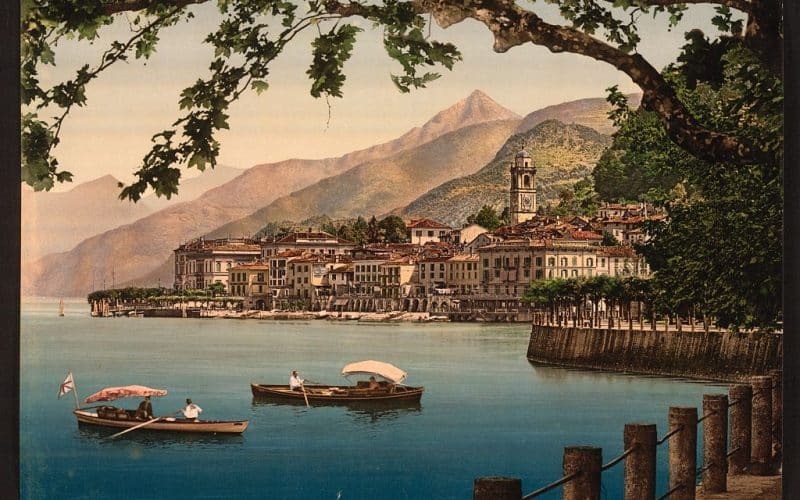
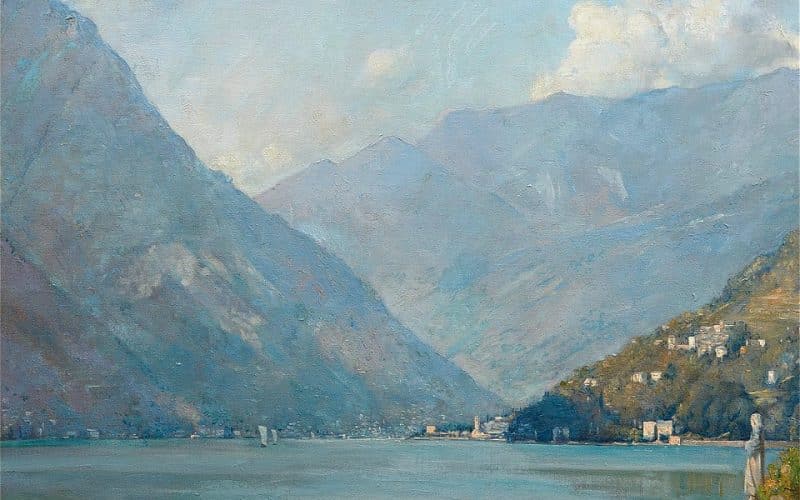
This lecture was cosponsored by the University of Chicago Divinity School and the In Lumine Network. It was made possible through the support of ‘In Lumine: Supporting the Catholic Intellectual Tradition on Campuses Nationwide’ (Grant #62372) from the John Templeton Foundation. Romano Guardini penned his Letters from Lake Como between 1923-1925 in order to think about the new technocratic relationship between nature and culture that was emerging in post-war and post-Enlightenment Europe. Guardini’s reflections on the technocratic paradigm are critical for understanding the relationship of the human person, the dynamics of culture, and our hyperdigitized world today. Guardini’s newly translated Liturgy and...
REGISTER HERE Open to current graduate students and faculty. Advanced undergraduates and others interested in participating should contact dstrobach@lumenchristi.org. All registrants will receive a copy of the required reading, which should be read in advance of the class. An optional wine and cheese reception will follow. This master class is made possible through the support of ‘In Lumine: Supporting the Catholic Intellectual Tradition on Campuses Nationwide’ (Grant #62372) from the John Templeton Foundation. This masterclass will cover Romano Guardini’s Letters from Lake Como, written between 1923-1925, and will focus on the relationship between technology, human nature, and culture. It will take a special...
Register Here Join us for a celebration of English Renaissance composer William Byrd in the four hundredth year following his death. Journey through Byrd's outstanding corpus with Schola Antiqua, as we survey his musical contributions to the Catholic recusant community, highlighting themes of trial and deliverance. Actor Jeff Parker will also read dramatic texts of Jesuit priest Robert Southwell, whom Byrd met in 1586. The program further includes some of the most prized music for keyboard known to that point, composed by Byrd. Guest harpsichordist Jason Moy (DePaul University), a specialist in Renaissance and Baroque keyboard music, joins Schola Antiqua to present this splendid...
-800x500.jpg "Catholic Culture Series on “Faith and Reason”")