
Genome Editing with CRISPR: Dignity and Other Faith-Based Considerations
— Cosponsored by the Program on Religion and Medicine at the University of Chicago, McCormick Theological Seminary, and the Society of Catholic Scientists. This program is made possible by a grant from the John Templeton Foundation. The discovery of CRISPR/Cas9 has revolutionized our ability to edit genomes, the human genome included. How do faith-based ethicists maneuver the landscape of human genetic engineering? What challenges do biotechnological advances pose to the dignity of the human person? Should genetic editing be celebrated? Cautiously advanced? Ruled out? In this lecture, biologist and Dominican Priest Nicanor Austriaco considered the prospects and challenges of CRISPR…
Science and Faith: Non-Overlapping Magisteria?

REGISTER HERE 5:30 Reception | 6:00pm Discussion Co-sponsored by The Columbia University Seminar on Catholicism, Culture and Modernity, the Columbia Catholic Ministry, and the Society of Catholic Scientists. This programming is made possible by a grant from the Templeton Foundation. A Discussion with Stephen Barr (University of Delaware), Jonathan Lunine (Cornell University), moderated by Carlo Lancellotti (CUNY Staten Island). In reaction to Pope John Paul II’s 1996 address to the Pontifical Academy of the Sciences, “Truth Cannot Contradict Truth”, Stephen Jay Gould famously published his view on religion and science being non-overlapping magisteria (NOMA). He proposed that religion and science were distinct and separate domains of teaching…
The Human Person in an Age of Biotechnology: A Symposium
We are at the very outset of the Age of Biotechnology. This presses anew questions regarding the limits of the human person. What is the human species from the point of view of evolutionary biology? How malleable is this definition? Is there such a thing as a species? How does this compare to philosophical perspectives on the person? The questions above are not new, but they have acquired new urgency with recent advances in biotechnology. In ths symposium, six distinguished scholars discuss these and other pressing questions in two panels–the first addressing these issues in the practice of science and application…
Master Class on “Heidegger & Aquinas on the Question Concerning Technology”
REGISTER HERE Open to current students and faculty. Copies of the readings will be provided for those who register. SCHEDULE 9:30am Coffee & Pastries 10:00am Session I 11:25am Break 11:35am Session II 1:00pm End, lunch REQUIRED READINGS Thomas Aquinas, Summa Theologica, I, Q.47, Art.1-2 (on creation); III, Q.60, Art.2-4 (on sacraments) Martin Heidegger, The Question Concerning Technology RECOMMENDED READINGS Francisco Benzoni. “Thomas Aquinas and Environmental Ethics: A Reconsideration of Providence and Salvation.” The Journal of Religion, Vol. 85, No. 3 (July 2005), pp. 446-476. Bernard Stiegler, Technics and Time, 1 (Stanford University Press, 1998) pp. 1-27.
Non-Credit Course on Modern Science and Christian Faith
6:00 Dinner | 6:30 Lecture This weekly non-credit course is open to current students and faculty. Registrants are free to attend as many sessions as they choose. Sessions do not presuppose previous attendance or prior knowledge of the subject. This program is made possible by a grant from the John Templeton Foundation and The Our Sunday Visitor Institute. People of faith have been deeply involved in the pursuit of science throughout the history of the discipline, from pioneering advances like the Big Bang and the building blocks of modern genetics, to the everyday, incremental toil of research. Yet, it is…
WEBINAR: Disease and the Problem of Evil
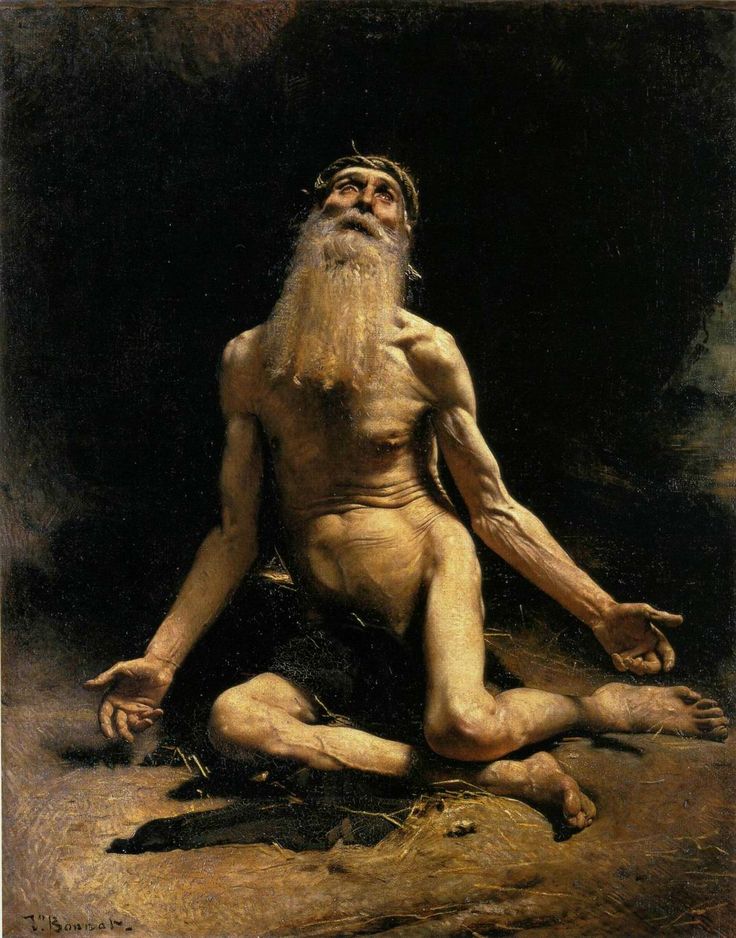
Cosponsored by America Media, the Society of Catholic Scientists, the Saint Benedict Institute, the Beatrice Institute, the Collegium Institute, the Nova Forum, and the Program on Religion and Medicine at the University of Chicago. This program is made possible by a grant from the John Templeton Foundation. Whether caused by pathogens, environmental exposure, or genetics, disease is typically understood to be an unwarranted and unwanted removal from one’s normal condition of good health. While a natural phenomenon, disease raises classic questions of theodicy. If illness is a privation of the good of health, should we also understand disease to be an evil? How can…
Faith and Science at Notre Dame: Fr. John Zahm, Evolution, and the Catholic Church
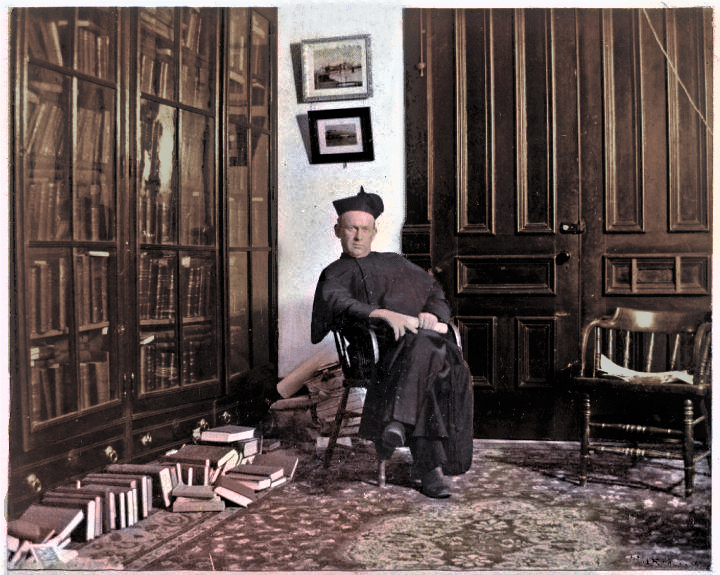
The Reverend John Augustine Zahm, CSC, (1851–1921) was a Holy Cross priest, an author, a South American explorer, and a science professor and vice president at the University of Notre Dame, the latter at the age of twenty-five. Through his scientific writings, Zahm argued that Roman Catholicism was fully compatible with an evolutionary view of biological systems, an argument that would get him (but not his book) censured in 1897 by the Vatican. In his talk Faith and Science at Notre Dame: John Zahm, Evolution, and the Catholic Church, John Slattery will chart the rise and fall of Zahm, examining his…
WEBINAR: Becoming Human: Evolution, Science, and the Soul
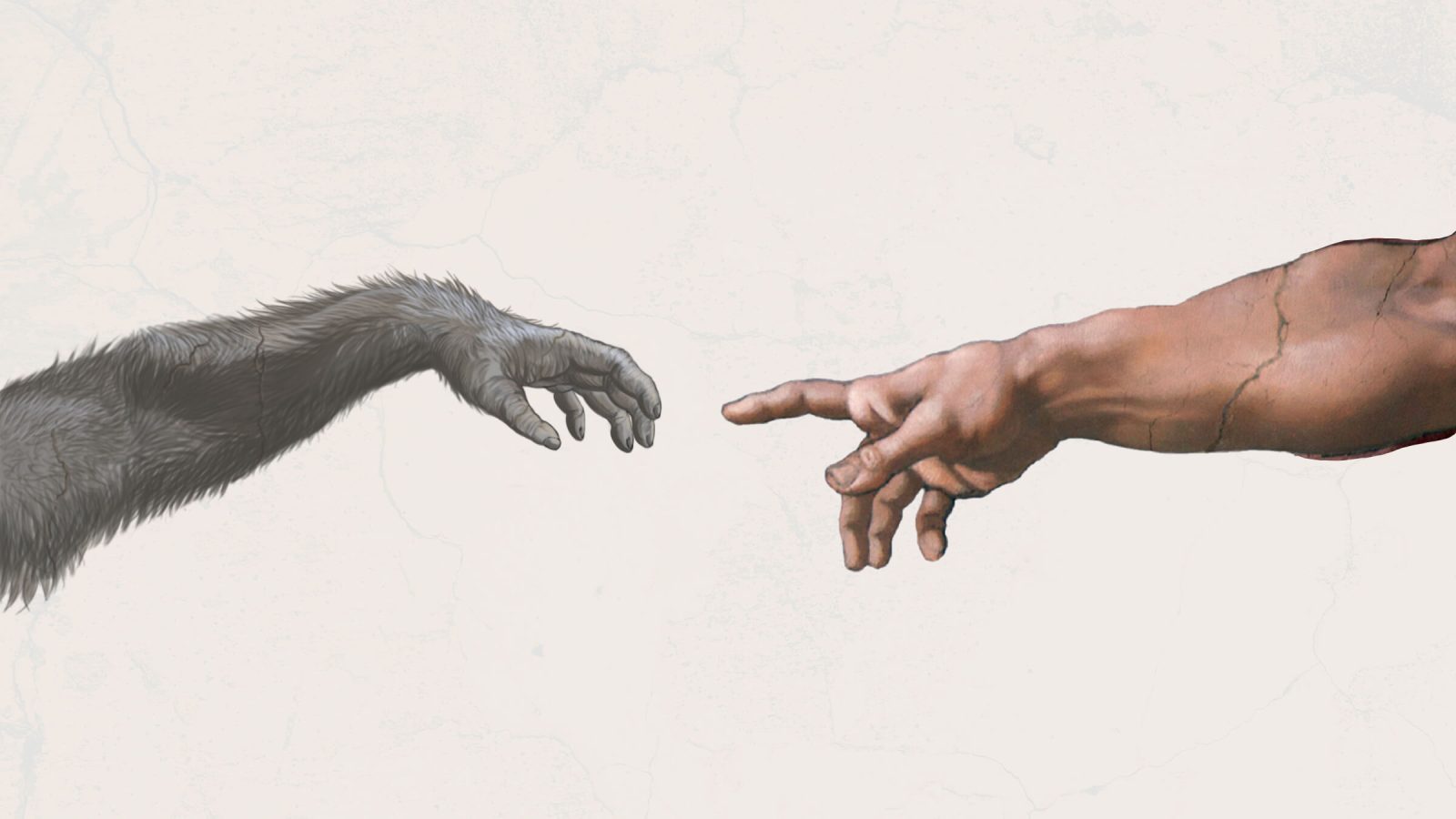
Presented by the Lumen Christi Institute’s Newman Forum, in cooperation with the University of St. Mary of the Lake, Mundelein, and the Archdiocese of Chicago Vocations Office. Open to current high school students. High school teachers and youth ministers are welcome to attend, and are encouraged to bring groups. Group leaders are now able to register themselves and their students together! This is especially encouraged for groups coming from outside of Chicagoland, to ensure groups remain together during the breakout sessions (see below). What can the science of evolution know? How is it related to religion, especially Catholic doctrine? Are they complementary or mutually…
What Evolution Does and Does Not Tell Us about Humans
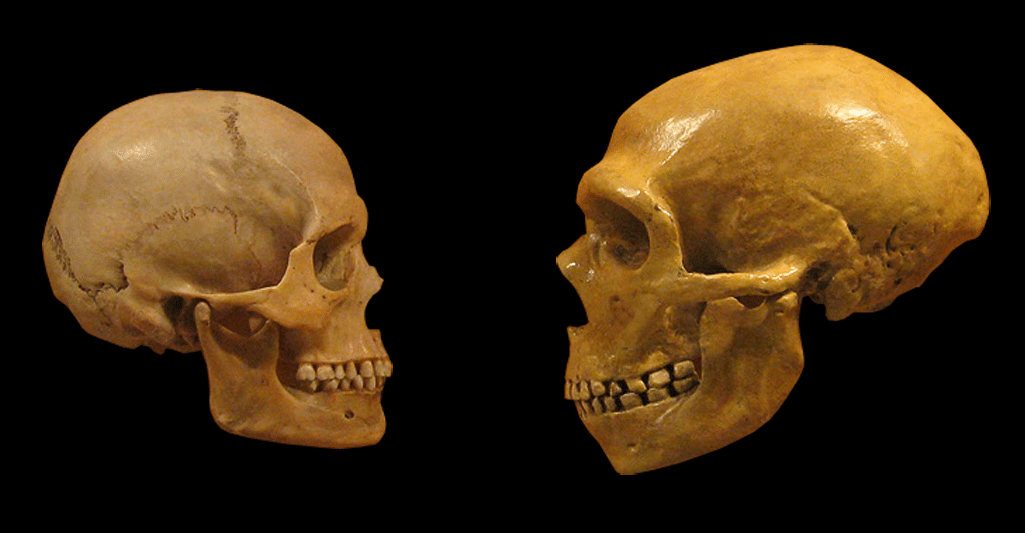
Cosponsored by the Society of Catholic Scientists. This event is made possible by a grant from the John Templeton Foundation. Does evolution fully explain the human? Recent paleontological and archeological work trace the deep lineages underlying many of our physical traits, and reveals our complicated history as one of many hominid species. It is abundantly clear that modern humans are subject to the same evolutionary pressures as the rest of the biological world and that evolution continues to shape our species. However, the developing story of our evolutionary history is frequently framed as a challenge to the claim of human…
Giordano Bruno and the Poetry of the Cosmos
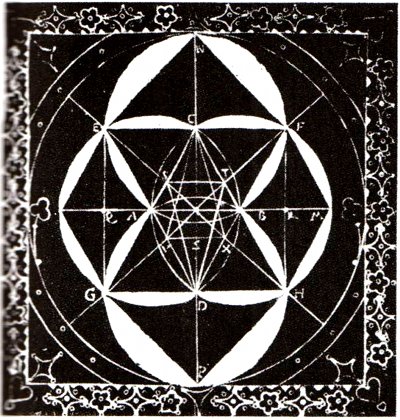
A webinar lecture with Valentina Zaffino (Pontifical Lateran University; Rome Global Gateway, University of Notre Dame). Part of our summer webinar series on “Reason and Beauty in Renaissance Christian Thought and Culture,” presented in collaboration with the American Cusanus Society Giordano Bruno (1548-1600) was an Italian Dominican friar, philosopher, mathematician, and cosmologist. Bruno’s notoriety is due both to his adventurous life and to his original reinterpretation of ancient thought in light of the new philosophical scenario. Valentina Zaffino will analyze Bruno’s image of the cosmos, focusing on his remodeled Neoplatonic background. In this context, as will be shown, the notions of harmony and beauty are closely related with Bruno’s…