
“The Christian Mystic in a Post-Modern Culture”
Co-sponsored by the University of Chicago Theology Workshop and the Center for World Catholicism and Intercultural Theology at DePaul University Maria Clara Bingemer (Catholic University at Rio de Janeiro) Bernard McGinn (University of Chicago, Emeritus)
A Philosophical Reading of the Prodigal Son
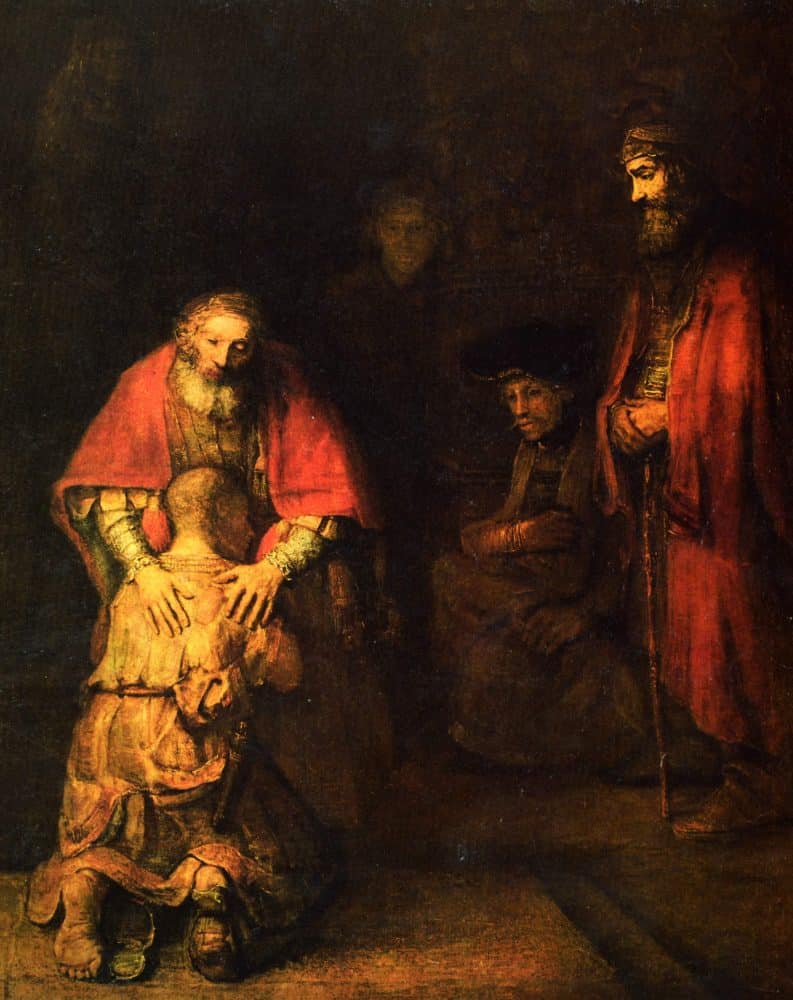
While the parable of the prodigal son has traditionally been read as a story about a wayward son in need of repentance or the conflict of two siblings over their just treatment, Hart will suggest that the father is the central character of the narrative. The phenomenological tradition is employed to shift the theological perspective of the parable toward a vision of the kingdom of God imagined through the forgiveness and unconditional love of the Father. This lecture was co-sponsored by the University of Chicago Theology Workshop.
Virtue, Action, and Reason: A Conference in Honor of Anselm Müller
The University of Chicago Philosophy Department will host a conference entitled, “Virtue, Action, and Reason” in honor of the Spring 2011 Lumen Christi visiting fellow, Anselm Müeller. The Lumen Christi Institute, along with a number of other institutes on campus, are delighted to act as conference co-sponsors. The publication of Elizabeth Anscombe Modern Moral Philosophy in 1958 is often taken to mark a watershed event in analytic philosophical ethics. In this justly famous paper, Anscombe laid out three controversial theses. First, she argued that philosophers should not do moral theory until they have worked out an adequate philosophy of action and…
“The Importance of Elizabeth Anscombe”
Co-sponsored by the Department of Philosophy TO LISTEN: right click on below links to download or open in new window “The Importance of Elizabeth Anscombe,” Anselm Mueller (part 1) “The Importance of Elizabeth Anscombe,” Anselm Mueller (part 2) “The Importance of Elizabeth Anscombe,” Anselm Mueller (part 3) Elizabeth Anscombe has become known as a pupil and literary executor of Wittgenstein, but also as a defender of conservative views on questions of morality. A. W. Müeller will suggest that she has contributed to current intellectual life in three ways: 1) by initiating a philosophy of action that helps us to argue responsibly about moral…
Symposium on Czesław Miłosz
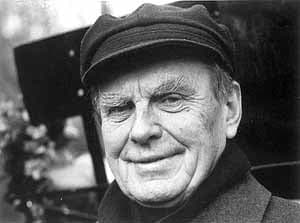
Sponsored by The Department of Slavic Languages and Literatures, The Committee on Social Thought, The Committee on Creative Writing, The Program on Poetry and Poetics, and The Lumen Christi Institute. Saturday, October 22, 1:30pm-4:00pm Symposium on Polish poet, Czeslaw Milosz At the 100th anniversary of his birthday Social Sciences, Tea Room (2nd Floor) Program 1:30pm Introductory Remarks 1:45pm Adam Zagajewski, University of Chicago 2:15pm Bozena Shallcross, University of Chicago 2:45pm Coffee break 3:00pm Lukasz Tischner, Jagellonian University, Cracow 3:30pm Thomas Pavel, University of Chicago
“Phenomenology and Naturalism: Attitude and Objectivity”
Edmund Husserl was a philosopher, mathematician, and founder of the philosophical school of phenomenology. Professor Moran will argue that Husserl was correct to see naturalism as the dominant tendency of twentieth-century science and philosophy. Naturalism can be understood in many different senses, but it is typically defined by its commitment to science as the arbiter of what is objective. Husserl took naturalism to be self-refuting. Moran will discuss Husserl’s arguments, and in particular, the manner in which Husserl redefines ‘objectivity’ within his transcendental idealism, which is his alternative to naturalism. Moran’s lecture will be followed by commentary from Professors Jean-Luc…
Symposium on Timothy Matovina’s new book, “Latino Catholicism: Transformation in America’s Largest Church”
Cosponsored by The American Religious History Workshop and The Center for Latin American Studies Finely researched, engagingly written, and more comprehensive than any other book on the subject, Timothy Matovina’s Latino Catholicism is a scholarly labor of love that does justice to the historic presence of Latino Catholics in America….His book raises the bar for studies of U.S. religion and society. -Allan Figueroa Deck, S.J. Timothy Matovina (University of Notre Dame) with responses from: Peter Casarella (DePaul University) Kathleen Conzen (University of Chicago)
“The Grand Design: An Augustinian Reply to Stephen Hawking”
Cosponsored by The Theology Workshop Stephen Hawking has recently declared that philosophy is dead, and that science is the only reasonable method for securing knowledge. In response, Professor Cavadini will argue that philosophy is rooted in man’s wonder about the universe, and that scientific inquiry is only one aspect of true wisdom and should not be privileged over others.
“A Critical Look at Ayn Rand”
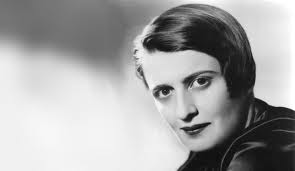
The continuing success of the books of Ayn Rand, even among Catholics, reveals the influence of her thought in debates on the role of the individual, community, market, and state in modern societies. At the same time, Rand’s success may have obscured fundamental flaws in her thought. A closer look at her philosophical, moral, political, and economic positions brings into question both the legitimacy of her success as well as the credulity of her disciples and the American public. Is it possible for anyone to be a legitimate philosopher in an age of clever marketing and mass consumption?
Newman, Vatican II, and the Hermeneutic of Continuity
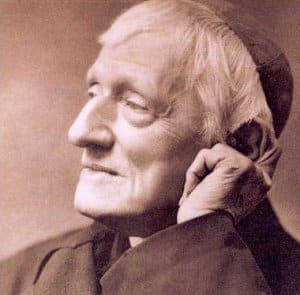
Often called the Father of the Second Vatican Council, Newman both anticipated a number of its teachings and, through his recovery of the thought of the early Church, provides a hermeneutic of continuity for interpreting the Council’s documents.