From 2012 to 2020, Fr. Paul Mankowski, SJ delivered hundreds of lectures and master classes at the Lumen Christi Institute. Seeking to share the depth of his scholarship, this podcast offers many of his lectures (edited for coherence and quality) to the public in digital format for the first time.
The first season features a course that Fr. Mankowski gave on Joseph Ratzinger’s Jesus of Nazareth, and dozens of lectures centered around the books of the Bible (including Genesis, many of the prophets, the Gospel of Matthew, and St. Paul’s Letter to the Romans). Two interviews with people who knew Fr. Mankowski well and can offer an entry point to his person and scholarship conclude the season.
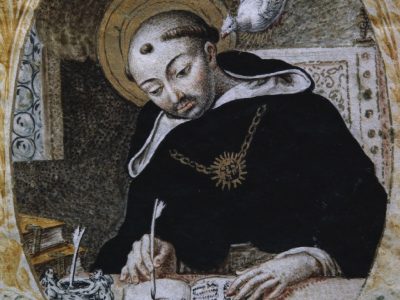
Cosponsored by the Medieval Studies Workshop and the Theology and Religious Ethics Workshop “The well-known is what we have yet to learn.” T.S. Eliot What do we know of the prayer-life of St Thomas Aquinas? This lecture will be directly
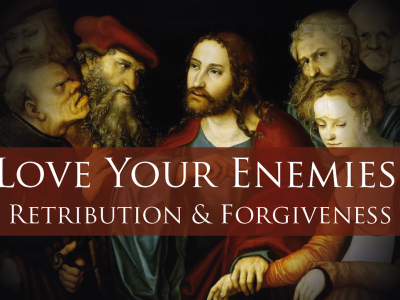
Regina M. Schwartz (Northwestern University) cosponsored by the Department of English The law presumes not only the right but the duty to punish: it does not ask whether it should punish, but how much, who, when, and how. In contrast,
cosponsored by the Medieval Studies Workshop The meaning of Anselm’s famous ‘sola ratione’ or ‘by reason alone’ has been the subject of much debate. Is it a principle of reason or a principle of faith? This lecture will argue that
Rémi Brague (Sorbonne, University of Munich) Cosponsored by the France Chicago Center If the contrary of civilization is barbarism, we have to take seriously the etymology of the latter word, i.e. the inability to engage in a conversation. Conversation presupposes
cosponsored by the Theology and Religious Ethics Workshop and the Early Christian Studies Workshop When modern persons think about assistance for the poor the two major categories that tend to dominate are the motivations of the donor (altruism) and the
Gary A. Anderson (University of Notre Dame; author of Charity: The Place of the Poor in the Biblical Tradition) It has long been acknowledged that Jews and Christians distinguished themselves through charity to the poor. Though ancient Greeks and Romans
Jean-Luc Marion (University of Chicago) cosponsored by the Philosophy Department How is it possible to admit a rational truth that at the same moment could not be achieved by mere rationality? This implies a revision of the definition of knowing,
How does today’s economy impact the modern family? Several trends link mounting burdens on family life to economics: children are raised amid familial and fiscal instability, young people are delaying or forgoing marriage, the elderly are made increasingly vulnerable with
Giuseppe Mazzotta (Yale University) Keynote Lecture for the Graduate Student Conference on “Amor Vincit Omnia: Love as a Destructive Force in Italian Arts and Literature” Sponsored by: The Franke Institute for the Humanities, the Norman Waite Harris Fund, the Istituto
Lewis Ayres (University of Durham) To understand the exegetical culture that nurtured and formed classical Patristic exegesis, we must attend to some understudied features of the generation of Irenaeus and Clement of Alexandria. This generation, in response to the exegetical