Lecture Abstract: The claim that knowledge involves an identity of knower and known has its historical roots among the Greeks. This lecture explores this claim as one finds it in the writings of St. Thomas Aquinas. Professor O’Callaghan will explore these issues in critical dialogue with two different papers, one by Wilfrid Sellars titled “Being and Being Known” and the other by John McDowell titled “Sellars’s Thomism.”
This conference is offered for legal scholars, law students, and others interested in Christian legal thought. Conference Schedule Registration: 8:45am Panel One: 9:00am-10:30am “Public Unions and the Current State of Organized Labor ” David L. Gregory, St. Johns University School of Law Thomas C. Kohler, Boston College Law School John O. McGinnis, Northwestern University Law School Panel Two: 10:45am-12:15pm “Pedagogy” Susan Stabile, University of St. Thomas School of Law Deanell Reece Tacha, Pepperdine University School of Law Michael Scaperlanda, University of Oklahoma College of Law Lunch: 12:15pm-1:30pm Panel Three: 1:30pm-3:00pm “Law, Speech, and Morality” Eric R. Claeys, George Mason University School of Law Mary G. Leary,...
Lecture, 7:00pm Informal Dinner, 6:30pm Intended for University students, faculty, and recent graduates. Others interested in attending, contact info@lumenchristi.org. January 19 Athanasius of Alexandria: Theologian of the Incarnation†Aaron Canty (St. Xavier University) January 26 Jerome in Bethlehem Robin Darling Young (University of Notre Dame) February 2, 7:15pm Social Sciences 122 The Grand Design: An Augustinian Reply to Stephen Hawking John Cavadini (University of Notre Dame) February 9 Origen: Christian Faith and Greek Wisdom Andrew Radde-Gallwitz (Loyola University Chicago) February 16 St. Augustine on Love Jean-Luc Marion (University of Chicago, University Paris-Sorbonne) Registration closed. The event has reached seating capacity. February 23 Swift Hall, Third...
Before “solidarity” became a legal concept and later the name of the Polish labor movement, it developed as an economic, political, social, but most fundamentally a theological idea from which the rest of the Catholic social teaching tradition developed.
Cosponsored by The Theology Workshop Stephen Hawking has recently declared that philosophy is dead, and that science is the only reasonable method for securing knowledge. In response, Professor Cavadini will argue that philosophy is rooted in man’s wonder about the universe, and that scientific inquiry is only one aspect of true wisdom and should not be privileged over others.
Cosponsored by The American Religious History Workshop and The Center for Latin American Studies Finely researched, engagingly written, and more comprehensive than any other book on the subject, Timothy Matovina's Latino Catholicism is a scholarly labor of love that does justice to the historic presence of Latino Catholics in America….His book raises the bar for studies of U.S. religion and society. -Allan Figueroa Deck, S.J. Timothy Matovina (University of Notre Dame) with responses from: Peter Casarella (DePaul University) Kathleen Conzen (University of Chicago)
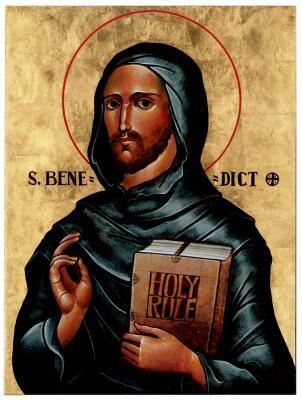
While Roman civilization collapsed around him, Benedict a fifth-century monk and abbot authored his Rule for monks and set forth a way of life for the monasteries that would become one of the few lights of wisdom and civility in an age of increasing darkness and social isolation. Benedict taught those who lived in these dark ages how to make their daily lives an integrated whole of prayer and work, enlightened by the wisdom of Christ. In this respect, his Rule contains many lessons that apply to Christians in contemporary life.
Co-sponsored by the Templeton Foundation and The Philosophy Department Abstract: For Aquinas, ethics is nothing other than the study of human psychology insofar as it flourishes or fails to flourish. Consequently, his thought on emotion is crucial to his account of virtue. This lecture will discuss Aquinas's theory of the emotions and its implications for his virtue theory.
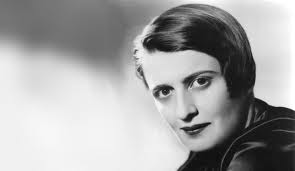
The continuing success of the books of Ayn Rand, even among Catholics, reveals the influence of her thought in debates on the role of the individual, community, market, and state in modern societies. At the same time, Rand's success may have obscured fundamental flaws in her thought. A closer look at her philosophical, moral, political, and economic positions brings into question both the legitimacy of her success as well as the credulity of her disciples and the American public. Is it possible for anyone to be a legitimate philosopher in an age of clever marketing and mass consumption?
Many people find that they cannot reconcile belief in the existence of God with the reality of evil; for if an all powerful and perfectly good God exists, then why is there so much suffering and injustice? Brian Davies, in his most recent book, Thomas Aquinas on God and Evil, argues that Aquinas gives us the proper theoretical framework for dealing with these tensions.
Presented by the Committee on Social Thought and the Department of Philosophy. Co-sponsored by the Lumen Christi Institute. In his most recent book, A Case for Irony, Jonathan Lear argues that becoming a human being is a difficult task, and that developing a capacity for irony is essential to doing it well. He claims that ironic experience is a form of truthfulness that is constitutive of human flourishing, such that a capacity for irony is a kind of virtue or human excellence. Alasdair MacIntyre will join Lear in a conversation about his book.