
A Carnal Love of Concepts or a Work of Mercy? The Intellectual Life and the Dominican Vocation
co-sponsored by the Committee on Social Thought and the Program in Medieval Studies In the Order of Preachers (Dominicans), study has a central place as it is an integral part of the religious life itself. What is the aim of studying theology and other sciences within a Christian vocation?
“From Natural Law to Human Rights in Jewish Thought”
Co-sponsored by the Ethics Club and Jewish Studies and the Hebrew Bible Workshop TO LISTEN: right click on below links to download or open in new window “From Natural Law to Human Rights in Jewish Thought,” David Novak (part 1) “From Natural Law to Human Rights in Jewish Thought,” David Novak (part 2) “From Natural Law to Human Rights in Jewish Thought,” David Novak (part 3)
“Irenaeus: Bishop, Martyr, and Opponent of Gnosticism”
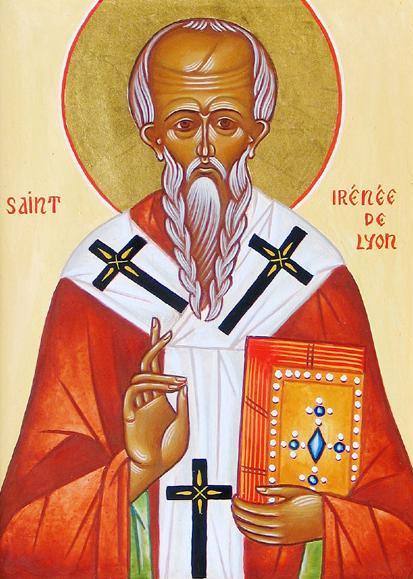
Thursday Evenings, Non-Credit Course, Autumn Quarter 2011 “The Age of the Church Fathers: From Pagan Philosophy to Christian Wisdom” Cobb Lecture Hall, Room 201 5811 S. Ellis Avenue Lecture, 7:00pm Informal Dinner, 6:30pm October 13 “Introduction: Why Study the Fathers?” Fr. Michael Heintz (University of Notre Dame) October 20 “Clement of Alexandria: Neo-Platonism and Christian Wisdom” Brian Daley, S.J. (University of Notre Dame) October 27 “Justin Martyr: Early Christian Engagement with Greek Philosophy” Aaron Canty (St. Xavier University) November 3 “Tertullian: What Does Athens Have to do with Jerusalem?” Msgr. Michael Heintz (University of Notre Dame) Tuesday, November 8, Social Sciences…
Symposium on “God, Freedom, and Public Life”
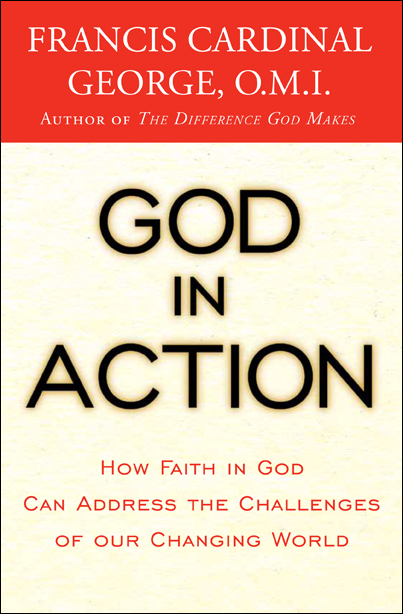
Co-sponsored by the Committee on Social Thought The Lumen Christi Institute is pleased to co-sponsor a symposium at the University of Chicago entitled “God, Freedom, and Public Life” on the occasion of the publication of Francis Cardinal George’s book God in Action: How Faith in God can Address the Challenges of the World. The symposium featured contributions from Jean Bethke Elshtain (University of Chicago), Hans Joas (University of Chicago), Martin Marty (University of Chicago), and Francis Cardinal George, OMI (Archbishop of Chicago).
The Church Fathers: The Shaping of Christian Orthodoxy, Non-Credit Course
Lecture, 7:00pm Informal Dinner, 6:30pm Intended for University students, faculty, and recent graduates. Others interested in attending, contact info@lumenchristi.org. January 19 Athanasius of Alexandria: Theologian of the Incarnation†Aaron Canty (St. Xavier University) January 26 Jerome in Bethlehem Robin Darling Young (University of Notre Dame) February 2, 7:15pm Social Sciences 122 The Grand Design: An Augustinian Reply to Stephen Hawking John Cavadini (University of Notre Dame) February 9 Origen: Christian Faith and Greek Wisdom Andrew Radde-Gallwitz (Loyola University Chicago) February 16 St. Augustine on Love Jean-Luc Marion (University of Chicago, University Paris-Sorbonne) Registration closed. The event has reached seating capacity. February 23 Swift Hall, Third…
Symposium on Timothy Matovina’s new book, “Latino Catholicism: Transformation in America’s Largest Church”
Cosponsored by The American Religious History Workshop and The Center for Latin American Studies Finely researched, engagingly written, and more comprehensive than any other book on the subject, Timothy Matovina’s Latino Catholicism is a scholarly labor of love that does justice to the historic presence of Latino Catholics in America….His book raises the bar for studies of U.S. religion and society. -Allan Figueroa Deck, S.J. Timothy Matovina (University of Notre Dame) with responses from: Peter Casarella (DePaul University) Kathleen Conzen (University of Chicago)
“The Grand Design: An Augustinian Reply to Stephen Hawking”
Cosponsored by The Theology Workshop Stephen Hawking has recently declared that philosophy is dead, and that science is the only reasonable method for securing knowledge. In response, Professor Cavadini will argue that philosophy is rooted in man’s wonder about the universe, and that scientific inquiry is only one aspect of true wisdom and should not be privileged over others.
“Benedict’s Teaching for Dark Ages, His and Ours”
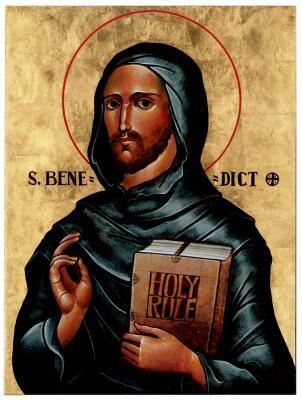
While Roman civilization collapsed around him, Benedict a fifth-century monk and abbot authored his Rule for monks and set forth a way of life for the monasteries that would become one of the few lights of wisdom and civility in an age of increasing darkness and social isolation. Benedict taught those who lived in these dark ages how to make their daily lives an integrated whole of prayer and work, enlightened by the wisdom of Christ. In this respect, his Rule contains many lessons that apply to Christians in contemporary life.
“Thomas Aquinas on God and Evil”
Many people find that they cannot reconcile belief in the existence of God with the reality of evil; for if an all powerful and perfectly good God exists, then why is there so much suffering and injustice? Brian Davies, in his most recent book, Thomas Aquinas on God and Evil, argues that Aquinas gives us the proper theoretical framework for dealing with these tensions.
“Emotion and Virtue in Thomas Aquinas”
Co-sponsored by the Templeton Foundation and The Philosophy Department Abstract: For Aquinas, ethics is nothing other than the study of human psychology insofar as it flourishes or fails to flourish. Consequently, his thought on emotion is crucial to his account of virtue. This lecture will discuss Aquinas’s theory of the emotions and its implications for his virtue theory.