
“Reason and Wisdom in Medieval Christian Thought,” Non-Credit Course
Informal Dinner: 6:00PM Lecture: 6:30PM Intended for University students, faculty, and recent graduates. Others interested in attending, contact info@lumenchristi.org. With the recovery of the works of Aristotle in the Latin West, the development of the scholastic method of reasoning, and the creation of the universities, a style of academic philosophy and theology developed in the late medieval period in which the practice of reasoning about Christian revelation was developed independent of spirituality and, often, the search for wisdom. Previously, in the works of the Church Fathers and the great monastic writers, theology was rooted in a spiritual life uniting prayer and…
“The Capacious Mind of St. Thomas”
Co-Sponsored by the Medieval Studies Workshop The thought of Thomas Aquinas, especially as it bears upon human action, leads one to make difficult choices. Aquinas insists that a lie even to save the life of another is always a sin. He also insists that one ought not ever by means of a direct act to take the life an innocent human being. Understanding Thomas’s capacious mind” and the nature of the acts in question held us to understand why we should follow him in these matters.
“The Careful Rationality of Monotheism: Thomas Aquinas on Analogical Knowledge of God”
Co-sponsored by the Medieval Studies Workshop How can philosophers speak about God in a reasonable fashion? Does speech about God exceed the capacities of human reason? In responding to these questions, Thomas Aquinas develops a path between the extremes of apophaticism (rejecting the applicability of human language to God) and rationalistic optimism. This lecture will argue for the validity of Thomist doctrine of divine naming and its relevance to contemporary debates in analytic theism and to Heidegger’s critique of onto-theology (the theology of being).
“The Virgin Mary as Model of the Church: From Vatican II to Thomas Aquinas”
Co-sponsored by the History of Christianity Club The Second Vatican Council insisted that the Virgin Mary is to be understood in light of the Church, and the Church is to be understood in light of the Virgin Mary. Why should the Church seek to recover today a greater emphasis on Marian devotion? How is the Virgin Mary a model of the faith and spiritual life of Christians? Thomas Aquinas provides the basis for a contemporary interpretation of the Council’s Marian teachings.
Aquinas’ Third Way of Proving a God: Logic or Love?
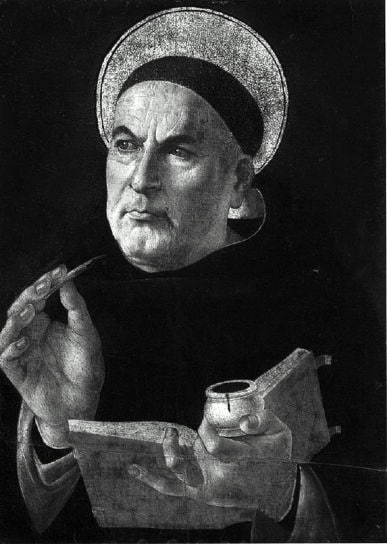
Cosponsored by the Medieval Studies Workshop Thomas Aquinas’ famous five ways of proving the existence of a God continue to intrigue and perplex his readers. The most troublesome is perhaps the third—the one based on the possible and the necessary—to which all sorts of objections can be heard: logical, scientific, theological, phenomenological, even Thomistic. Contrary to the usual assumption, however, the kind of possibility and necessity that the third way regards does not seem to be the logical kind. In a sense, it has more to do with love than with logic. This reading puts the problems that the third way faces, and also the…
Divine Faith and Private Judgment in Newman and Aquinas
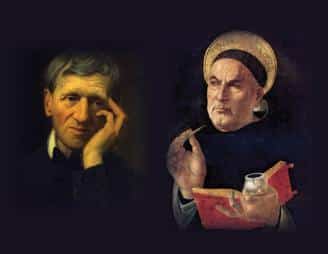
REGISTER HERE cosponsored by the Theology and Religious Ethics Workshop
Aquinas: Poet and Contemplative
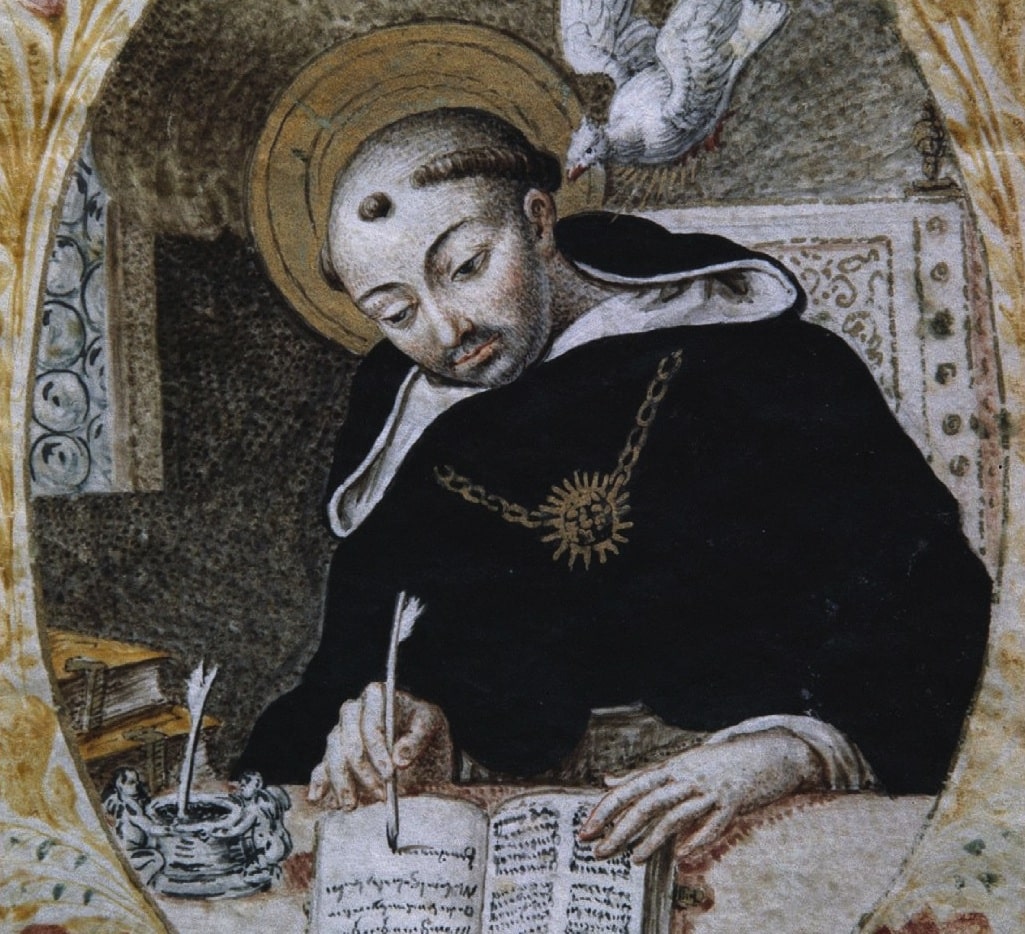
Cosponsored by the Medieval Studies Workshop and the Theology and Religious Ethics Workshop “The well-known is what we have yet to learn.” T.S. Eliot What do we know of the prayer-life of St Thomas Aquinas? This lecture will be directly concerned with this question, and the answer may well come as a surprise to many people. Aquinas is still today almost exclusively regarded as an outstanding scholastic philosopher and theologian. But what is little known is that he was also a master of the spiritual life and a very considerable poet, perhaps even the greatest Latin poet of the Middle…
Aquinas and the Life of the Mind
Saint Thomas Aquinas regards mind, or intellect, as a form of life. It is even the most perfect form, he says, because it carries the power of free choice. Yet we may wonder how free he thinks we really are. For he insists that our mind’s life depends, intimately, on a cause outside itself. But on his view, freedom of choice would not even make sense without this cause; and our lives are fullest, and freest, when we focus more on it than on ourselves. This is to follow the mind’s deepest urge, which is toward that rather neglected virtue…
Master Class on Grace, Free Choice, and the Infused Virtues
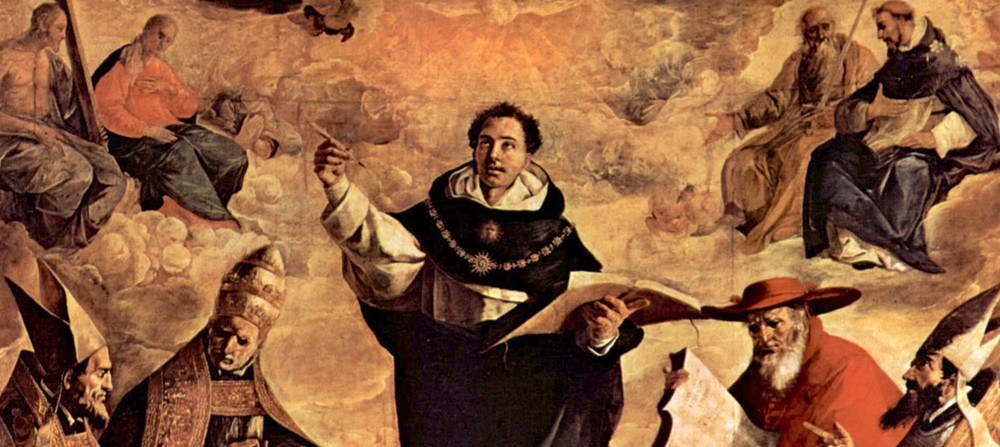
Open to current university students and faculty. A link to the readings will be provided for registrants. SESSION I: “Grace and Free Choice” Primary Reading: Thomas Aquinas, Summa Theologiae, Ia, q. 83, art. 1-4 Secondary Reading: Servais Pinckaers OP, The Sources of Christian Ethics, (Washington, D.C.: The Catholic University of America Press, 1995), chapters XIV-XV on the liberty of indifference and liberty of quality. Daniel Westberg, Right Practical Reason. Aristotle, Action, and Prudence in Aquinas, (Oxford: Clarendon Press, 1994), p. 119-135. Wojciech Giertych OP, “Conscience and the Liberum Arbitrium”, in: Crisis of Conscience, ed. by John M. Haas, (New York:…
The Moral Theology of Aquinas: Is it for Individuals?
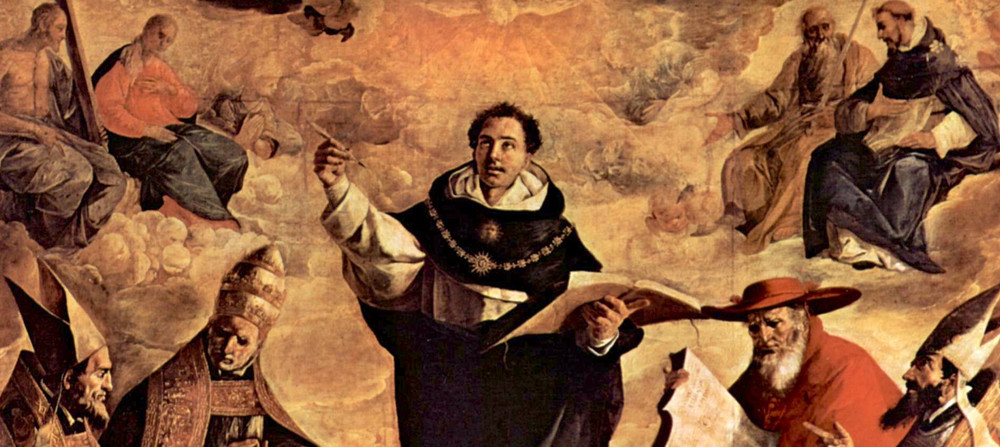
Free and open to the public. Cosponsored by the Theology Club at the Divinity School and the Hildegard of Bingen Society for Christian Thought and Culture. Is the moral teaching of Aquinas a purely cerebral, speculative reflection that can hardly be correlated with practical Christian living, or does it have a message that can be correlated with the experience and difficulties of an average individual? This lecture views the theology of Aquinas in the light of the concrete down-to earth approach focused on individuals that seems to be the basic gift of Pope Francis. It attempts to propose a reading…