Schola Antiqua Concert: Caged Byrd
General $25 / Students $10. Purchase tickets HERE. A concert of sacred motets and keyboard music by William Byrd with Jason Moy, harpsichord. For more information visit the Schola Antiqua website.

General $25 / Students $10. Purchase tickets HERE. A concert of sacred motets and keyboard music by William Byrd with Jason Moy, harpsichord. For more information visit the Schola Antiqua website.
THURSDAY, MAY 19 The International House at The University of Chicago Public Symposium Archbishop Thomas G. Wenski, Archbishop of Miami Christopher Barrett, Cornell University Mary Evelyn Tucker, Yale University Michael Greenstone, The University of Chicago V. Ramanathan, The University of California, San Diego FRIDAY, MAY 20 The Hilton Chicago/Magnificent Mile Suites SESSION I: The Current State of Environmental Degradation and its Impact on the Most Vulnerable Richard Carson, The University of California, San Diego Christopher Barrett, Cornell University SESSION II: Catholic Social Teaching on the Environment Jame Schaefer, Marquette University David Cloutier, Mount St. Mary’s University Session III: Practical Responses to the Problem Geoffrey Heal, Columbia University Mark Jacobsen, The...
Cosponsored by the Philosophy of Religions Workshop and the Theology & Religious Ethics Workshop Although Martin Heidegger is nearly as notorious as Friedrich Nietzsche for embracing the death of God, the philosopher himself acknowledged that Christianity accompanied him at every stage of his career. In Heidegger’s Confessions, Ryan Coyne isolates a crucially important player in this story: Saint Augustine. Uncovering the significance of Saint Augustine in Heidegger’s philosophy, he details the complex and conflicted ways in which Heidegger paradoxically sought to define himself against the Christian tradition while at the same time making use of its resources.
This intensive seminar will discuss St. Thomas Aquinas’s Five Ways of proving the existence of a God and the conception that he thinks they yield: that of a God who is at once utterly simple and utterly perfect, and therefore utterly beyond our comprehension. The sessions will center on Summa Theologiae, I, qq. 2-4—especially, of course, q. 2, a. 3, which contains the Five Ways themselves—and on selected texts from qq. 12 & 13. Participants will also discuss relevant passages from other works of St. Thomas, as well as his historical influences and some related contemporary issues.
Now in its fourth consecutive year, this intensive seminar will examine Newman’s achievements as theologian, philosopher, educator, preacher, and writer. Remarkably, in each of these areas Newman produced works that have come to be recognized as classics: An Essay on the Development of Christian Doctrine, The Grammar of Assent, The Idea of a University, The Parochial and Plain Sermons, and the Apologia Pro Vita Sua. This seminar will approach Newman’s thought through a critical engagement with these texts.
In this seminar, students will read, analyze, and discern continuities and discontinuities in Catholic Social Thought from the late 19th century to the present. Lectures, seminar reports, and discussion will focus on original sources (encyclicals and other magisterial documents), beginning with Rerum novarum (1892) and concluding with Caritas in veritate (2009) and Evangelii Gaudium (2013). This intensive course is multi-disciplinary, since this tradition of social thought overlaps several disciplines in the contemporary university including political science, political philosophy, law, economics, theology, and history.
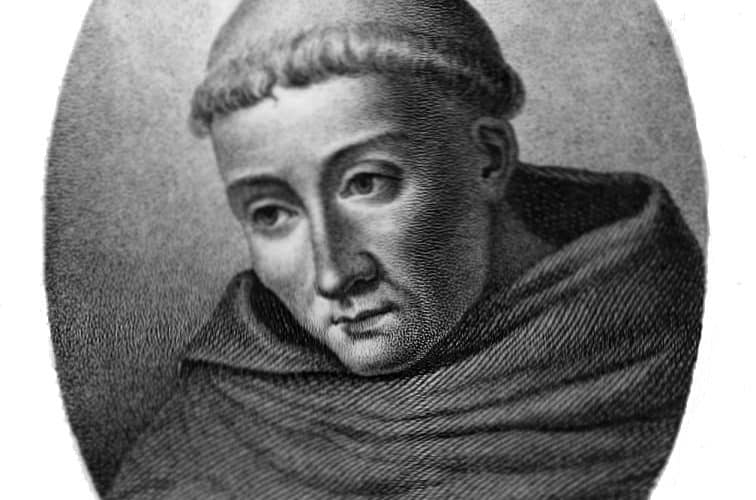
This master class is open to graduate students and faculty. Undergraduates or others interested in participating should contact us. PDFs of the readings will be made available online for all participants. Complimentary copies of Early Christian Mystics (Crossroads, 2003) will be provided at the seminar. This one-time Seminar will study selected writings of the great Cistercian theologian and mystic, Bernard of Clairvaux (1090-1157). Bernard was one of the most remarkable figures of the twelfth century—monastic leader, ecclesiastical politician, and noted theologian. His most important legacy, however, was as a mystic and mystical writer. His mystical treatises, such as On Loving...
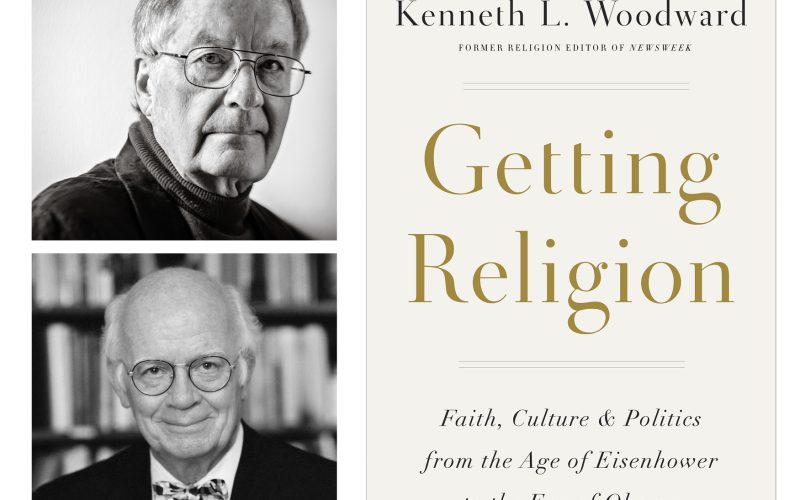
ABOUT THE BOOK Impeccably researched, thought-challenging and leavened by wit, Getting Religion, the highly-anticipated new book from Kenneth L. Woodward, is ideal perfect for readers looking to understand how religion came to be a contentious element in 21st century public life. Here the award-winning author blends memoir (especially of the postwar era) with copious reporting and shrewd historical analysis to tell the story of how American religion, culture and politics influenced each other in the second half of the 20th century. There are few people writing today who could tell this important story with such authority and insight. A scholar...
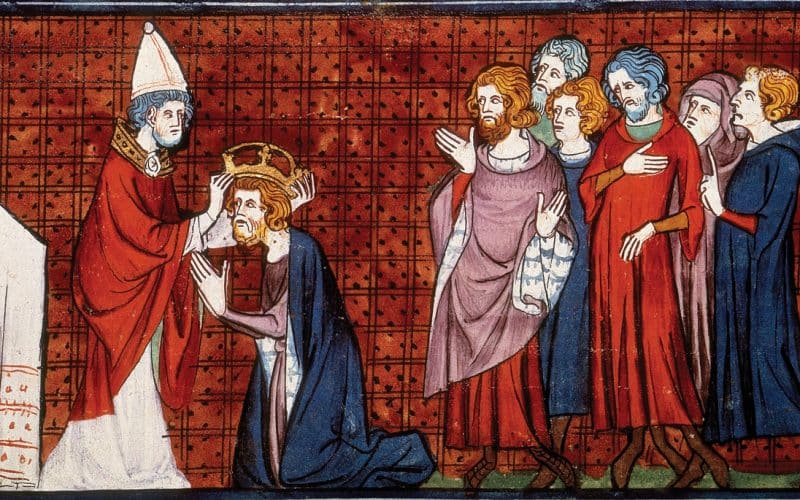
REGISTER HERE Cosponsored by the History Department and the Medieval Studies Workshop The lecture will focus on the extraordinary millennial career of the sacral kingship down through the ages and across the globe as the most common form of government known to humankind. It will trace its survival down into the early modern era and highlight the unexpected turn whereby it drew the papacy itself into its ideological orbit and helped transform the popes into the last of the great sacral monarchs. You can read more about Prof. Oakley's book on Kingship HERE.
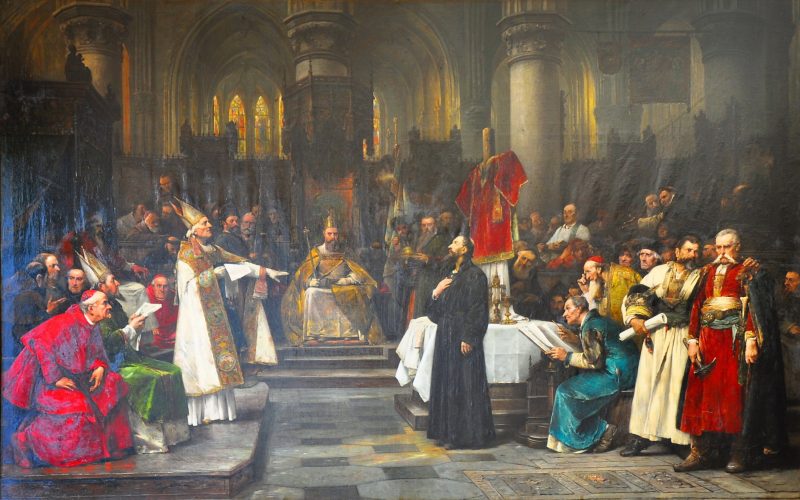
REGISTER HERE Cosponsored by the History Department and the Medieval Studies Workshop In the early fifteenth century, the general council assembled at Constance and, representing the universal Church, put an end to the scandalous schism which for almost forty years had divided the Latin Church between rival lines of claimants to the papal office. It did so by claiming and exercising an authority superior to that of the pope, an authority by virtue of which it could impose constitutional limits on the exercise of his prerogatives, stand in judgment over him, and if need be, depose him for wrongdoing. This...
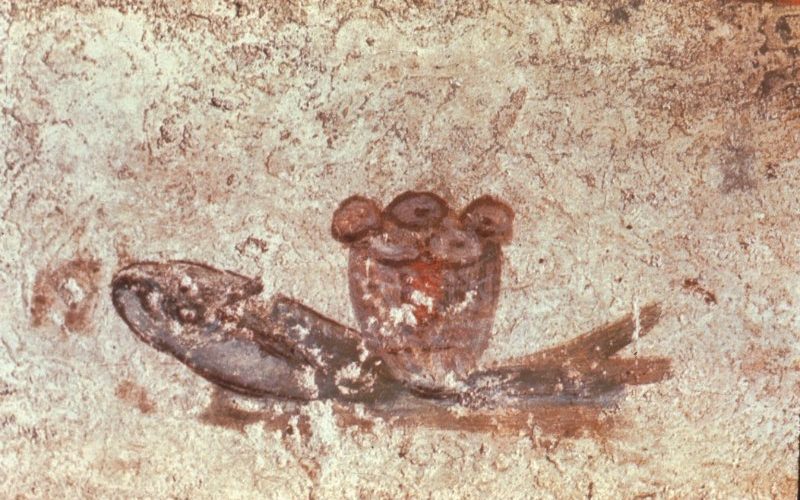
REGISTER HERE This master class is open to graduate and undergraduate students, including non-University of Chicago students. Space is limited and offered on a first-come, first-served basis. A masterpiece of early Christian apologetic literature (about 200), this short anonymous writing gives a vivid description of the paradoxical way in which Christians live in the pagan world and gives us precious hints about God's ways. The actuality of such an ancient work for our secularized world is amazing. The text can be found HERE.
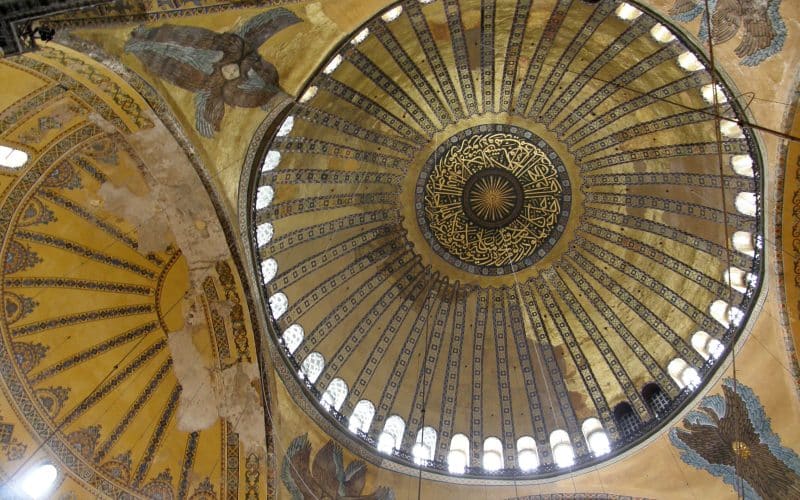
Cosponsored by the France Chicago Center and the Department of Near East Languages and Civilizations The Near East of today is very much in the center of attention, for obvious political and military reasons. Yet, it is worth while to look at its past cultural history. It was for millennia the hub of the world's higher culture. It was especially fruitful in the Roman Empire and in the first centuries of Islam. Its influence on European culture was real. It is a duty for us all to recall this heritage and to try and save what is left of it.