Dei Verbum: Persons and Propositions
Presented by St. Procopius Abbey, Benedictine University, and the Lumen Christi Institute Free and open to the public. Contact Fr. Becket Franks, O.S.B. with any questions.

Presented by St. Procopius Abbey, Benedictine University, and the Lumen Christi Institute Free and open to the public. Contact Fr. Becket Franks, O.S.B. with any questions.
REGISTER HERE Cosponsored by the Department of Philosophy It is commonly accepted that Aristotelian ideas did not inform Latin-language metaphysics until the translation of Aristotle in the 12th century. However, this opinion has arisen from a failure to understand how the metaphysics of Augustine fundamentally depends upon Victorinus’ assimilation of Aristotelian concepts and distinctions. Victorinus, mentioned by Augustine in Confessions Book 7, was a Christian convert, an eminent rhetor, and one of the last philosophers in the western Roman Empire who was fully bilingual in Greek and Latin. In the 350's he wrote metaphysical treatises defending the Council of Nicea's doctrine...
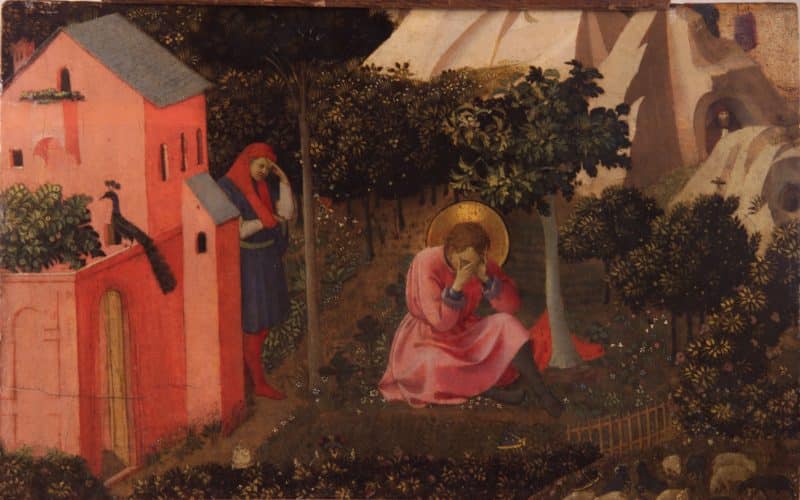
REGISTER HERE This master class is open to graduate and undergraduate students, including non-University of Chicago students. Space is limited and offered on a first-come, first-served basis. Copies of the readings will be made available online to all participants. Although the part of Augustine’s Confessions that describes his conversion to Christianity is arguably the most famous passage in his influential corpus, scholars have long disagreed about how to understand this important section of Book 8. I will argue that the hermeneutical key to the passage is knowledge of the philosophical psychology that Augustine assumes in the passage, which is a...
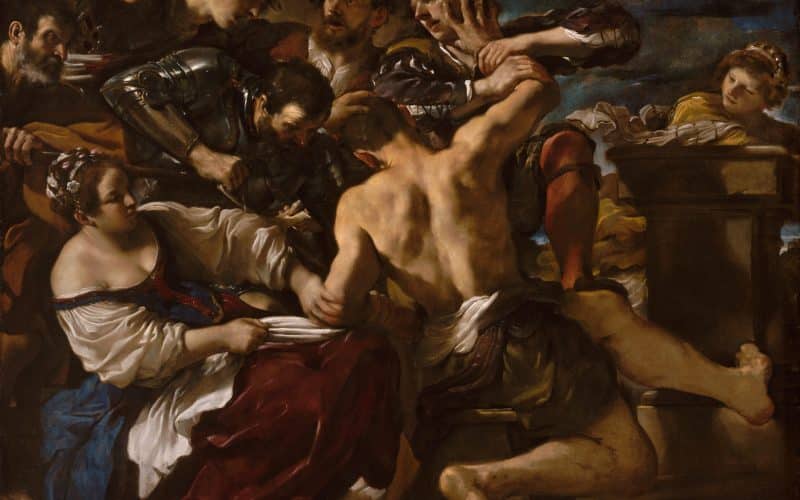
6:00 Dinner | 6:30 Lecture Open to current students and faculty. Others interested in attending please contact info@lumenchristi.org. Registrants are free to attend as many sessions as they choose. The Book of Judges is a collection of loosely connected accounts of the loosely connected Israelite tribes in the period between the death of the general Joshua and the establishment of the first kingdom. This time of religious and military crisis brought to the fore a series of heroes called šōṕēṭîm (judges) who, as emergency agents of God's deliverance and chastisement, reconnected the Israelites to the promises made in the covenants. In...
Cosponsored by the Theology and Religious Ethics Workshop While theology and biological science often seem to be at odds, there are productive ways of telling the Christian story of who we are as human beings which resonate with newer evolutionary theories. This lecture will argue that the most convincing theological approach is theo-drama, where insights from the dramatic stage inform our theological reflections in relation to the drama of evolution. Such exchanges can be highly creative for theology and anthropology; neither party in the dialogue is reduced to the other, and both are enriched in new and interesting ways.
Open to current University of Chicago undergraduates. Lunch will be served. Literary critic, noted essayist, and alumnus of the College Joseph Epstein will participate in a conversation with students about his life inside and outside the academy. Students are encouraged to read the short essay "Who Killed the Liberal Arts? And Why We Should Care" in preparation for the discussion.
Not many people are aware that when it comes to Irish religious history, St. Patrick only scratches the surface. The island in fact has a rich and fascinating Christian heritage, of which monks and sprawling monastic communities play a central role.
a concert with Schola Antiqua of Chicago (Lumen Christi Artists-in-Residence) BUY TICKETS $10 non-members | $5 members & students* * - Ticket allows for entry to the museum and event beginning at 2:30pm. To enter the museum prior to 2:30pm, please purchase a separate museum admission ticket. Schola Antiqua presents a concert in connection with the opening of The Deering Family Galleries of Medieval and Renaissance Art, Arms, and Armor at the Art Institute of Chicago. The program includes music inspired by beautifully illustrated books of hours and early sixteenth-century German art, as well as pieces celebrating the theme of...
REGISTER HERE Cosponsored by the Theology & Religious Ethics Workshop The Spiritual Franciscan Angelo Clareno (d.1337) fervently promoted the view that St. Francis’ life and Rule renewed the true evangelic life. When ecclesiastical persecution led him to flee to Greece, Angelo came into contact with both Greek monasticism and Greek theology based on the Church fathers. While in Greece, he translated Greek texts and he found in Greek monastic traditions possibilities for living according to Francis’ rule outside the Franciscan order. Angelo’s time in Greece also led him to reflect on Church history and the relationship between Greek and Latin...
REGISTER HERE Cosponsored by the Department of History and the Committee for the Conceptual and Historical Studies of Science It is often thought that modern science developed largely independently of, or even in opposition to, religion. Some historians, however, have suggested that religious factors played a key role in the emergence of modern science in the seventeenth century, and were important in establishing a permanent and prominent place for scientific activity at the heart of modern Western culture. This lecture explores a number of ways in which religion may have had a positive impact on the emergence and consolidation of...
Students will read and discuss Chapter 2 from Professor Peter Harrison's book The Territories of Science and Religion (University of Chicago, 2015) entitled "The Cosmos and the Religious Quest." Prof. Harrison will also give a public lecture on "Religious Origins of Modern Science?" on Thursday, April 6. ABOUT THE BOOK The conflict between science and religion seems indelible, even eternal. Surely two such divergent views of the universe have always been in fierce opposition? Actually, that’s not the case, says Peter Harrison: our very concepts of science and religion are relatively recent, emerging only in the past three hundred years,...
REGISTER HERE This master class is open to current students and faculty. PDFs of the readings will be made available for participants. This one-time Seminar will study selected writings of the great Cistercian theologian and mystic, Bernard of Clairvaux (1090-1157). Bernard was one of the most remarkable figures of the twelfth century—monastic leader, ecclesiastical politician, and noted theologian. His most important legacy, however, was as a mystic and mystical writer. His mystical treatises, such as On Loving God (De diligendo Deo), and especially his eighty-six sermons on the biblical Song of Songs (Sermones super Cantica Canticorum), are among the most...