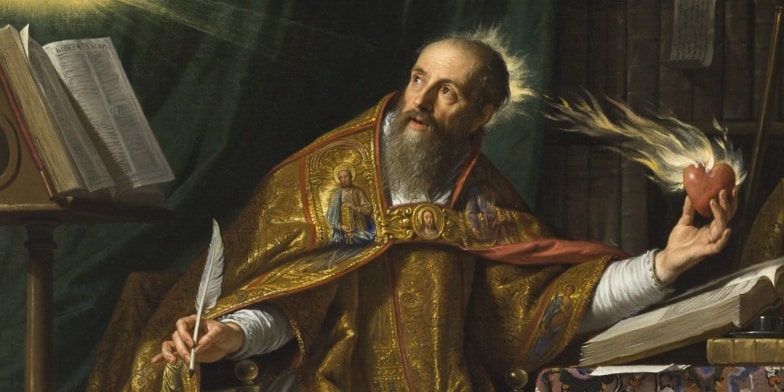
Augustine’s Theology of Love
Swift Hall, 3rd Floor Lecture 1025 E 58th St. Chicago, IL 60637, Hyde Park, ILCosponsored by the Theology and Religious Ethics Workshop

Cosponsored by the Theology and Religious Ethics Workshop
Open to current graduate students and faculty. Lunch will be provided. "I believe that the progressive fervor of the humanities, while it reenergized inquiry in the 1980s and has since inspired countless valid lines of inquiry, masks a second-order complex that is all about the thrill of destruction. In the name of critique, anything except critique can be invaded or denatured. This is the game of academic cool." Join Professor Lisa Ruddick for a discussion of the nature of critique and the sense of the self among scholars in the humanities from her recent article "When Nothing is Cool."
REGISTER HERE Open to current university students. Others interested in attending should contact us. Join us for an evening of prayer with Benedictine Monks at the Monastery of the Holy Cross. Students will participate in the prayer of the Divine Office (including Solemn Vespers with Gregorian Chant and Compline), and have dinner and discussion with Fr. Peter Funk, O.S.B., prior of the monastery and alumnus of the University of Chicago. More information on the music for Solemn Vespers can be found HERE. SCHEDULE 4:15pm Meet at Gavin House (1220 E. 58th St.) 4:30pm Depart from Hyde Park 5:00pm Arrive at...
REGISTER HERE Many people imagine that the Catholic Church was historically opposed to the theory of evolution or that there is something dangerous or dubious about Darwinian evolution from the viewpoint of Catholic theology. These ideas are based on a variety of confusions and misconceptions. This talk will show how Catholic thinkers and Catholic Church authorities looked at evolution. It will also respond to the arguments some Christians make against it, and examine some of the more subtle issues, such as the relation of chance to divine providence, and the questions surrounding human origins and human distinctiveness.
REGISTER HERE Open to current university students and faculty. Lunch will be served. Join us for a discussion with physicist Stephen Barr on his article from First Things on the philosophical assumptions behind a tendency toward reductionism in the natural sciences. "This tendency to downgrade and diminish reflects a metaphysical prejudice that equates explanatory reduction with a grim slide down the ladder of being. Powerful explanatory schemes reveal things to be simpler than they appear. What simpler means in science is much discussed among philosophers—it is not at all a simple question. But to many materialists it seems to mean...
REGISTER HERE This master class is open to current graduate students and faculty. Others interested in participating should contact us. Digital copies of the readings will be made available to participants. More info TBA
Presented by St. Procopius Abbey, Benedictine University, and the Lumen Christi Institute Free and open to the public. Contact Fr. Becket Franks, O.S.B. with any questions.
REGISTER HERE Cosponsored by the Department of Philosophy It is commonly accepted that Aristotelian ideas did not inform Latin-language metaphysics until the translation of Aristotle in the 12th century. However, this opinion has arisen from a failure to understand how the metaphysics of Augustine fundamentally depends upon Victorinus’ assimilation of Aristotelian concepts and distinctions. Victorinus, mentioned by Augustine in Confessions Book 7, was a Christian convert, an eminent rhetor, and one of the last philosophers in the western Roman Empire who was fully bilingual in Greek and Latin. In the 350's he wrote metaphysical treatises defending the Council of Nicea's doctrine...
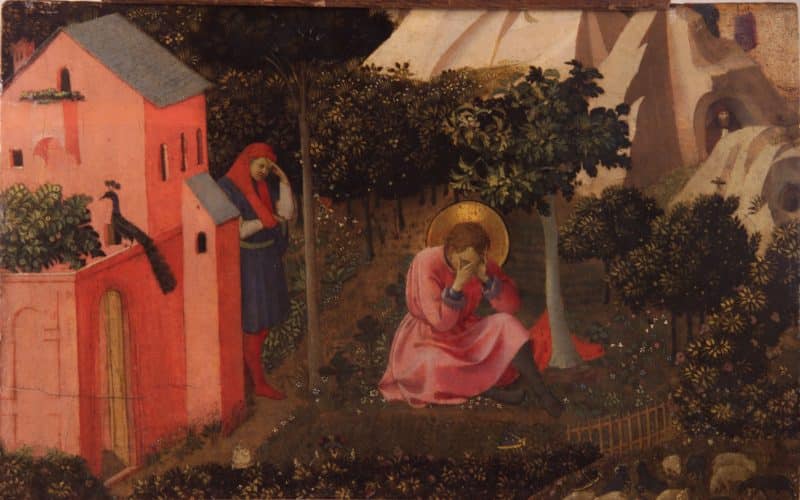
REGISTER HERE This master class is open to graduate and undergraduate students, including non-University of Chicago students. Space is limited and offered on a first-come, first-served basis. Copies of the readings will be made available online to all participants. Although the part of Augustine’s Confessions that describes his conversion to Christianity is arguably the most famous passage in his influential corpus, scholars have long disagreed about how to understand this important section of Book 8. I will argue that the hermeneutical key to the passage is knowledge of the philosophical psychology that Augustine assumes in the passage, which is a...
6:00 Dinner | 6:30 Lecture Open to current students and faculty. Others interested in attending please contact info@lumenchristi.org. Registrants are free to attend as many sessions as they choose. The Book of Judges is a collection of loosely connected accounts of the loosely connected Israelite tribes in the period between the death of the general Joshua and the establishment of the first kingdom. This time of religious and military crisis brought to the fore a series of heroes called šōṕēṭîm (judges) who, as emergency agents of God's deliverance and chastisement, reconnected the Israelites to the promises made in the covenants. In...
Cosponsored by the Theology and Religious Ethics Workshop While theology and biological science often seem to be at odds, there are productive ways of telling the Christian story of who we are as human beings which resonate with newer evolutionary theories. This lecture will argue that the most convincing theological approach is theo-drama, where insights from the dramatic stage inform our theological reflections in relation to the drama of evolution. Such exchanges can be highly creative for theology and anthropology; neither party in the dialogue is reduced to the other, and both are enriched in new and interesting ways.
Open to current University of Chicago undergraduates. Lunch will be served. Literary critic, noted essayist, and alumnus of the College Joseph Epstein will participate in a conversation with students about his life inside and outside the academy. Students are encouraged to read the short essay "Who Killed the Liberal Arts? And Why We Should Care" in preparation for the discussion.