Seminar
St. Thomas Aquinas on Law
University of California, Berkeley S Hall Rd. Berkeley, CA 94720, Berkeley, CANo description available
No description available
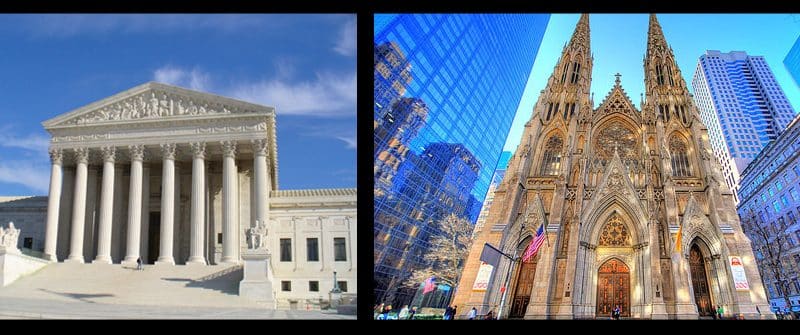
As President Clinton observed, "religious freedom is . . . our first freedom." It was central to the Founders' vision for the American political community. They did not always agree about what religious freedom means or requires, but they knew that it matters, and that it should be respected in policy and protected by law. James Madison, the Father of our Constitution, hoped that America's religious-liberty experiment promised a lustre to our country. This lecture will take stock of this experiment and consider the rights of religious believers and institutions and their roles and voices in American public life today. Co-sponsored...
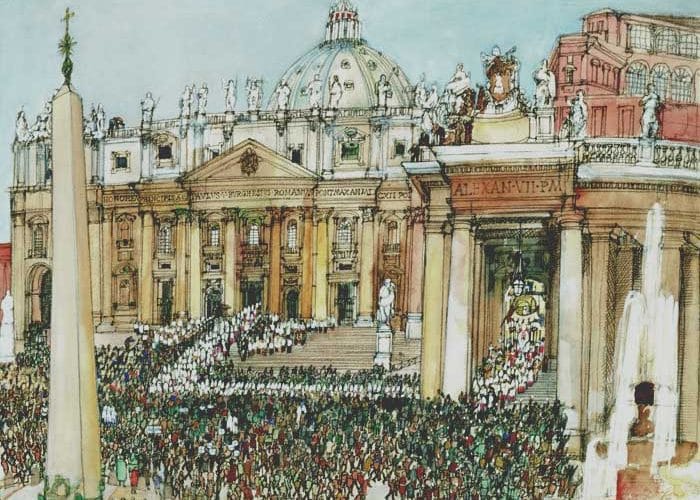
Cosponsored by the University of Chicago Ethics Club After decades of ideological upheaval that often placed the Catholic Church in conflict with modernity, Pope John XXIII convened the Second Vatican Council in part to open a dialogue with modern culture. This lecture will reflect on the theological developments that led to Vatican II's Pastoral Constitution on the Modern World, Gaudium et Spes, the document's text itself, and the history of its reception, and offer a perspective on the current health of the Church and its prospects for bringing the light of Christ to the world.
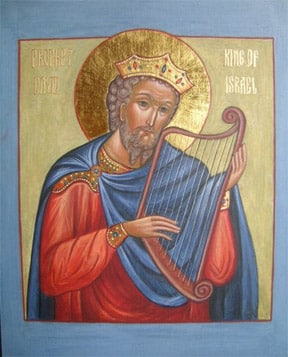
Lecture: 7:00PM Informal Dinner: 6:30PM October 16: The Prayer Book of Jesus What are the psalms and how did they become a psalter? The introductory class will address the nature of Jewish prayer and Hebrew poetry, lay out the various genres of psalms, and discuss the compilation of psalms into a book of the Old Testament and a keystone of the Church’s liturgy. Particular attention will be given Psalms 6, 19, and 27. October 23: Songs of Wrath God’s anger and man’s find full-throated expression in the Psalms, often in ways that shock or bewilder us. In coming to grips with the...
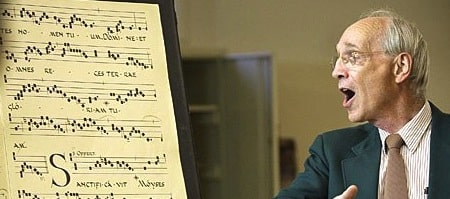
Cosponsored by the Department of Music and the Medieval Studies Workshop While it is easy to recognize traditional forms of sacred music: Gregorian chant, classical polyphony, organ music, choral music, and vernacular hymns it is difficult to pinpoint what it is that makes music sacred? This lecture will reflect upon the relation of the sacred and the beautiful in the liturgy. It will consider what is meant by sacred, as distinguished from holy and place those things considered sacred in the context of their reception and intrinsic suitability.
Cosponsored by the Department of Music and the Medieval Studies Workshop A principal Medieval definition of beauty is splendor formae, the manifesting of the very nature or form of a thing. While the liturgy can be described as a great divine action, it is also comprised of a variety of discrete chants. Being entirely sung, its Gregorian chants differentiate the character and function of each action and thus express a purposeful variety. This lecture will illustrate the beauty of the liturgy by comparing these chants particularly the gradual and alleluia in relation to the responsories of the Divine Office.
Cosponsored by the University of Chicago Ethics Club The presence of two Catholic candidates for vice-president have raised questions about Catholic social thought and American free market economics. In this symposium, an economist and a theologian consider how the Church's teaching bears on contemporary economic questions. The questions to be explored will include: What does the Catholic social thought developed by popes from Leo XIII and Pius XI to John Paul II and Benedict XVI say about economic issues? How can economists engage the principles of Catholic Social Thought and reflect on questions such as the just wage, social solidarity and the market...
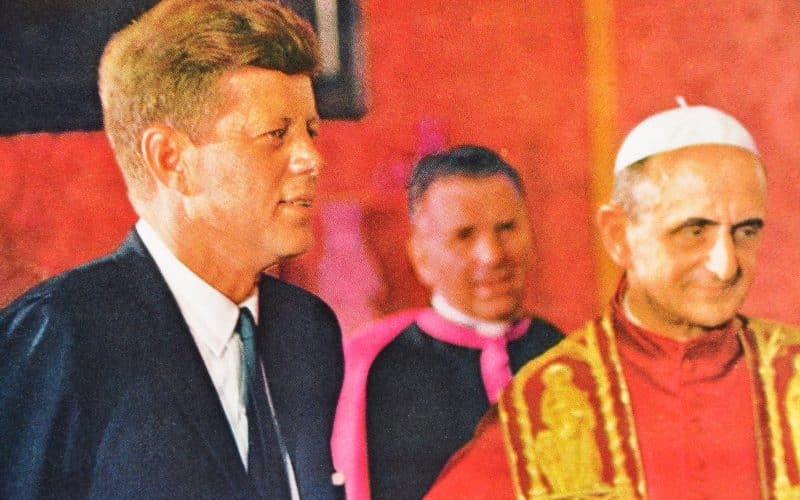
Cosponsored by The Department of History and The St. Thomas More Society At the third plenary session of Vatican II, Fr. John Courtney Murray said that the issue of religious liberty the American issue at the Council. Yet it took the longest to write, and, after undergoing thousands of comments and corrections over four years, it was signed by Pope Paul VI less than twenty-four hours before the Council was adjourned. This lecture will consider, (1) the reasons for this Declaration on Religious Liberty and the difficulties and debates at the Council, and (2) how the doctrine of religious liberty has fared...
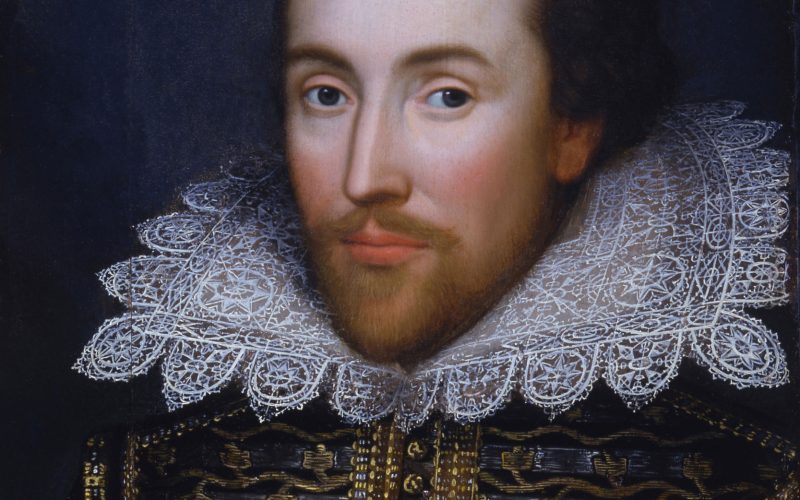
Cosponsored by The Nicholson Center for British Studies Whether Shakespeare was Catholic has long been a point of speculation. Recent research into the life of Oxford philosopher and double agent William Sterrell has revealed a neglected group of Catholics connected to Shakespeare at and around the courts of Queen Elizabeth and King James. The potential influence of these crypto-Catholics practicing their faith in animo while outwardly complying with the legally enforced state religion offers a new understanding of Shakespeare's works and audience.
This event is intended for college students. Dinner will be served. Contemporary culture is built in part on a mythology of the natural sciences. This mythology characterizes Christianity, particularly Catholicism, as a reactionary force clinging to a pre-modern worldview that brave men and women have replaced with a modern, scientific one. Two postdoctoral researchers at the University of Chicago's theoretical cosmologist and an evolutionary biologist will explain why this myth is false. Each will give a brief account of their own experience as scientists and reflect on the compatibility of faith and modern science. Ample time for questions and discussion will...
Cosponsored by the History of Christianity Club The great theologian Augustine of Hippo (354-430) is known to have condemned the doctrine of universal restoration and salvation (apokatastasis) devised by Origen of Alexandria (255ca.) as heretical. But in his earlier defense of Christian Orthodoxy against Manicheism, Augustine adhered to this doctrine. This lecture will show how Augustine's later polemic against the Pelagians and his ignorance of Greek played a significant role in his eventual rejection of Origen's doctrine.
December 7, 8pm Sacred Heart Parish 1077 Tower Road Winnetka, IL 60093 December 9, 3pm St. James Chapel at Quigley Center of the Archdiocese of Chicago 835 North Rush Street Chicago, IL 60611 BBC Music Magazine has placed Schola Antiqua’s “Tiding True” concert seriesamong the top 20 recommended concertsin the United States during the month of December. The centerpiece of this Schola Antiqua program will be Pierre de la Rue’s Missa Conceptio tua. This extensive work for extremely low voices was very much in demand in the early sixteenth century, but has not seen the light of day in modern performances or recordings. La Rue’s...