From 2012 to 2020, Fr. Paul Mankowski, SJ delivered hundreds of lectures and master classes at the Lumen Christi Institute. Seeking to share the depth of his scholarship, this podcast offers many of his lectures (edited for coherence and quality) to the public in digital format for the first time.
The first season features a course that Fr. Mankowski gave on Joseph Ratzinger’s Jesus of Nazareth, and dozens of lectures centered around the books of the Bible (including Genesis, many of the prophets, the Gospel of Matthew, and St. Paul’s Letter to the Romans). Two interviews with people who knew Fr. Mankowski well and can offer an entry point to his person and scholarship conclude the season.
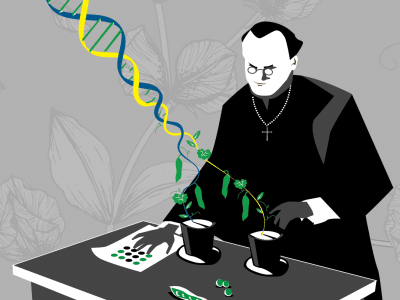
As we celebrate the bicentennial of Gregor Mendel’s birth, a few highlights of his life and legacy illustrate the breadth of his contributions and his genius. Born into poverty, he excelled in education in his youth. He entered the St.
An online interview for high-school students and teachers. What happens when I think? What makes for good thinking? Can I discover “truth,” and how would I know when I found it? How should I think about God? What is He
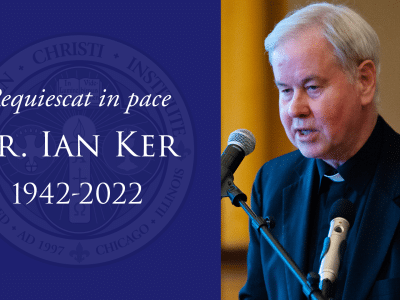
In tribute to Fr. Ian Ker, who went to the house of the Father on November 5, 2022, we share our collection of the brilliant scholarship he shared through the Lumen Christi Institute. He was an author, convert and priest,
Natural law theory has long been a central tenet of Christian philosophical and theological reflection on the relationship between God, the moral life, and society, and it has played an important historical role in shaping the political life of the
Is there a future for Christian Art? Can beauty save a “modern” world? This symposium features a presentation by Fr. Stephen Fields, SJ (Georgetown) in which he distinguishes between modernity and previous periods of the Western Christian experience and draws
Free and open to the public. Every Sunday, Christian worshipers profess the Nicene Creed. The Creed formulates and supports our belief in one God, but there appears to be scant empirical evidence for many of its claims that we acknowledge