
Reductionism in Science: Order from Chaos or Order from Ideas?
REGISTER HERE Open to current university students and faculty. Lunch will be served. Join us for a discussion with physicist Stephen Barr on his article from First Things on the philosophical assumptions behind a tendency toward reductionism in the natural sciences. “This tendency to downgrade and diminish reflects a metaphysical prejudice that equates explanatory reduction with a grim slide down the ladder of being. Powerful explanatory schemes reveal things to be simpler than they appear. What simpler means in science is much discussed among philosophers—it is not at all a simple question. But to many materialists it seems to mean…
Tracing our Shared Deep History: Evolutionary Anthropology and Theo-Drama

Cosponsored by the Theology and Religious Ethics Workshop While theology and biological science often seem to be at odds, there are productive ways of telling the Christian story of who we are as human beings which resonate with newer evolutionary theories. This lecture will argue that the most convincing theological approach is theo-drama, where insights from the dramatic stage inform our theological reflections in relation to the drama of evolution. Such exchanges can be highly creative for theology and anthropology; neither party in the dialogue is reduced to the other, and both are enriched in new and interesting ways.
Religious Origins of Modern Science?
REGISTER HERE Cosponsored by the Department of History and the Committee for the Conceptual and Historical Studies of Science It is often thought that modern science developed largely independently of, or even in opposition to, religion. Some historians, however, have suggested that religious factors played a key role in the emergence of modern science in the seventeenth century, and were important in establishing a permanent and prominent place for scientific activity at the heart of modern Western culture. This lecture explores a number of ways in which religion may have had a positive impact on the emergence and consolidation of…
Lunch Discussion on “The Cosmos and the Religious Quest”
Students will read and discuss Chapter 2 from Professor Peter Harrison’s book The Territories of Science and Religion (University of Chicago, 2015) entitled “The Cosmos and the Religious Quest.” Prof. Harrison will also give a public lecture on “Religious Origins of Modern Science?” on Thursday, April 6. ABOUT THE BOOK The conflict between science and religion seems indelible, even eternal. Surely two such divergent views of the universe have always been in fierce opposition? Actually, that’s not the case, says Peter Harrison: our very concepts of science and religion are relatively recent, emerging only in the past three hundred years,…
Science and Theology of Habitable Worlds Around Other Stars
Free and open to the public. Cosponsored by the Hildegard of Bingen Society for Christian Thought and Culture. You can view Professor Öberg’s recent presentation at the 2017 Society of Catholic Scientists Conference HERE. To view photos of the event, visit Lumen Christi’s Facebook page. You can subscribe to the Lumen Christi Institute Podcast via our Soundcloud page, iTunes channel, Stitcher, TuneIn, ListenNotes, Podbean, Pocket Casts, and Google Play Music.
Georges Lemaître: His Science, Faith, and Why “Hubble’s Law” Ought to be Renamed
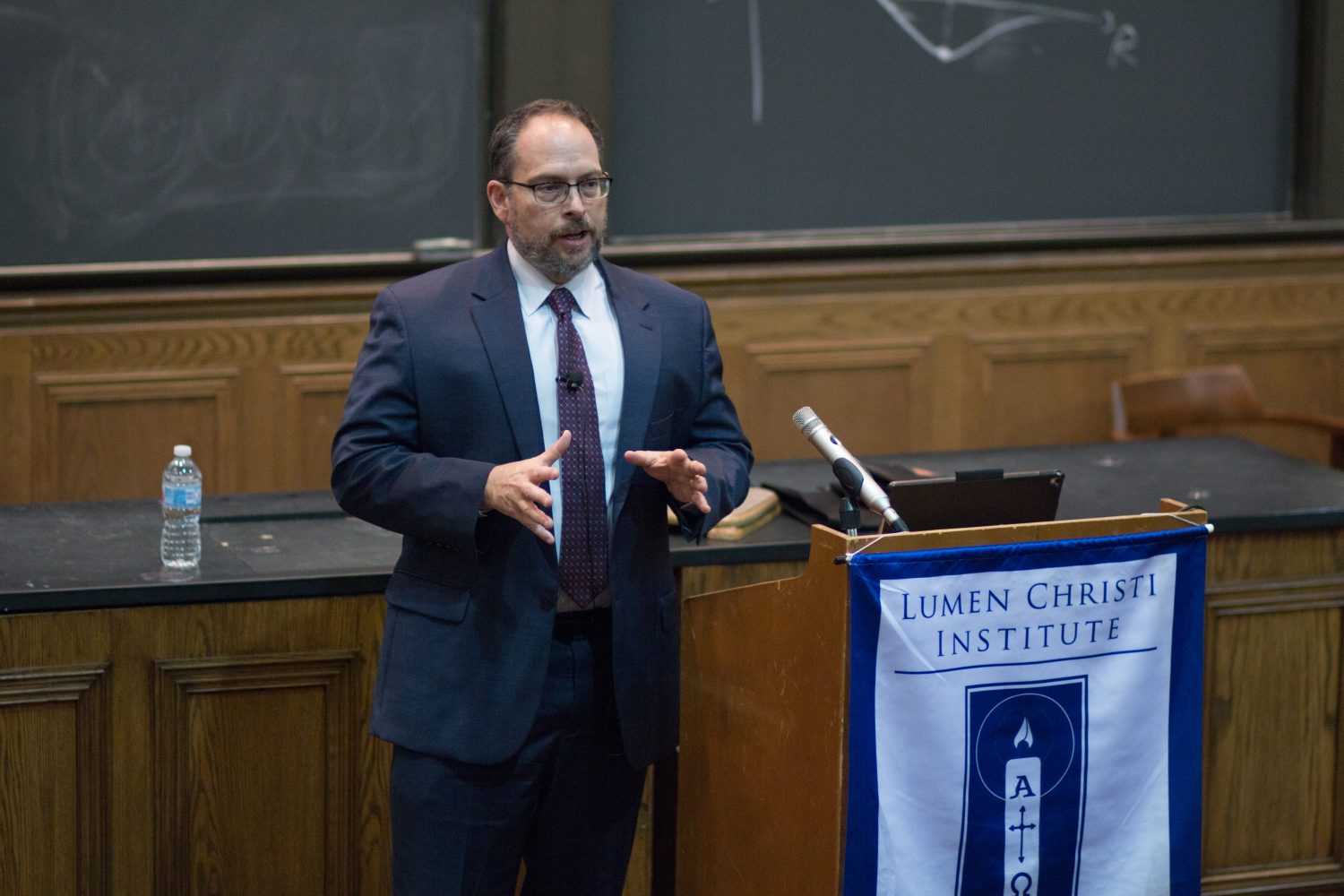
You can subscribe to the Lumen Christi Institute Podcast via our Soundcloud page, iTunes channel, Stitcher, TuneIn, ListenNotes, Podbean, Pocket Casts, and Google Play Music. To read an adapted version of Lunine’s lecture as an article published by the Notre Dame McGrath Institute for Church Life’s Church Life Journal, click here. To view photos of the lecture, visit Lumen Christi’s Facebook page. Free and open to the public. Cosponsored by the Department of Astronomy and Astrophysics. Georges Lemaître—a Belgian priest and cosmologist—proposed what came to be known as the “Big Bang” model of the origin of the cosmos. What is less well known is that Lemaître discovered and published Hubble’s…
Science, Creation, & the Catholic Imagination
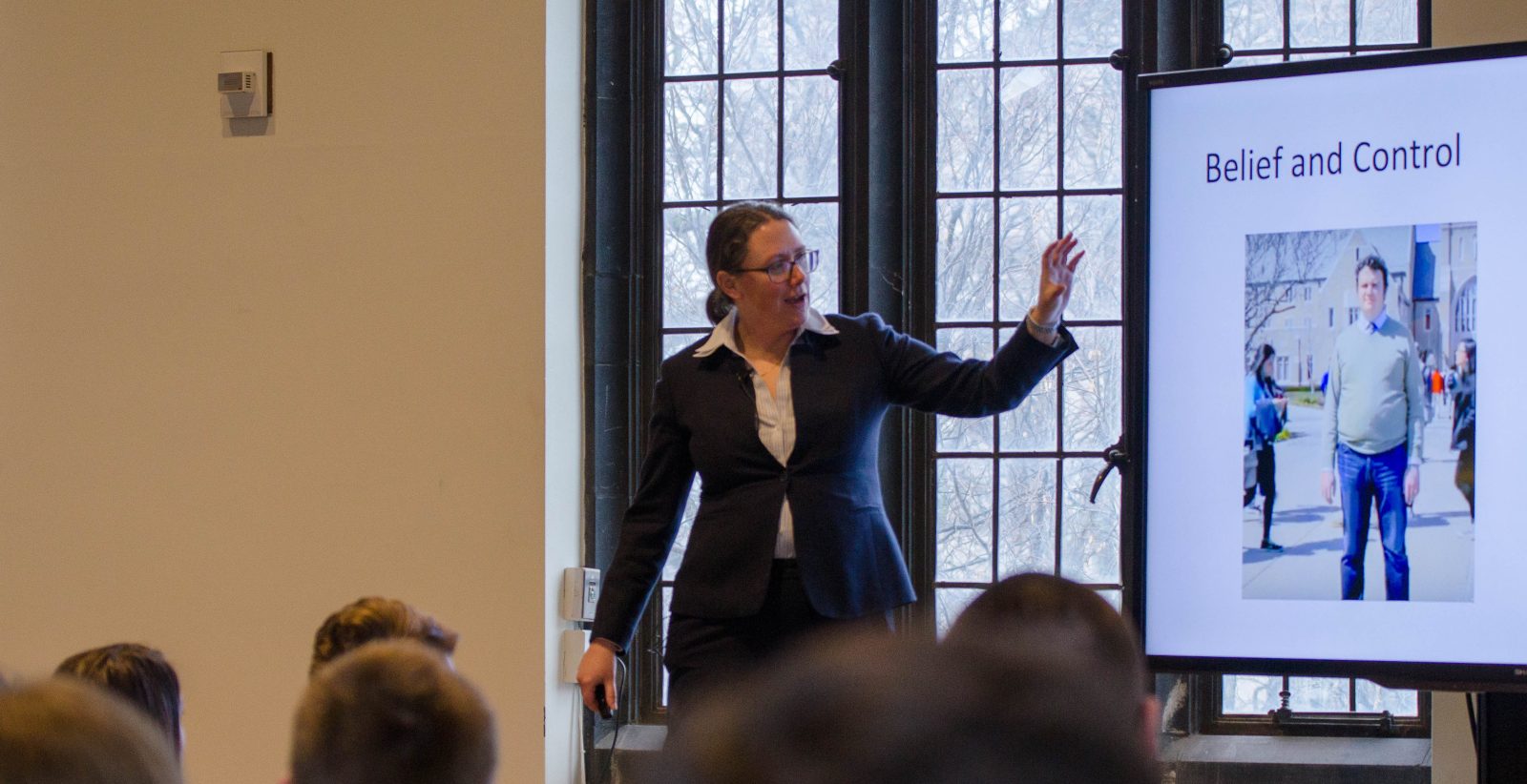
Listen to the lectures as podcast episodes. You can subscribe to the Lumen Christi Institute Podcast via our Soundcloud page, iTunes channel, Stitcher, TuneIn, ListenNotes, Podbean, Pocket Casts, and Google Play Music. To view photos of the conference, visit Lumen Christi’s Facebook page. Have you ever wondered if science and religion can co-exist? Or whether it is rational (or irrational) to believe in God? How can the story of Adam and Eve in the Book of Genesis be reconciled with the Big Bang? Or with evolution? What does The Lord of the Rings have to do with Jesus? And what exactly is hillbilly thomism? The intellectual tradition of the Catholic Church has been asking (and answering!) questions…
Symposium on “Science and Wonder”
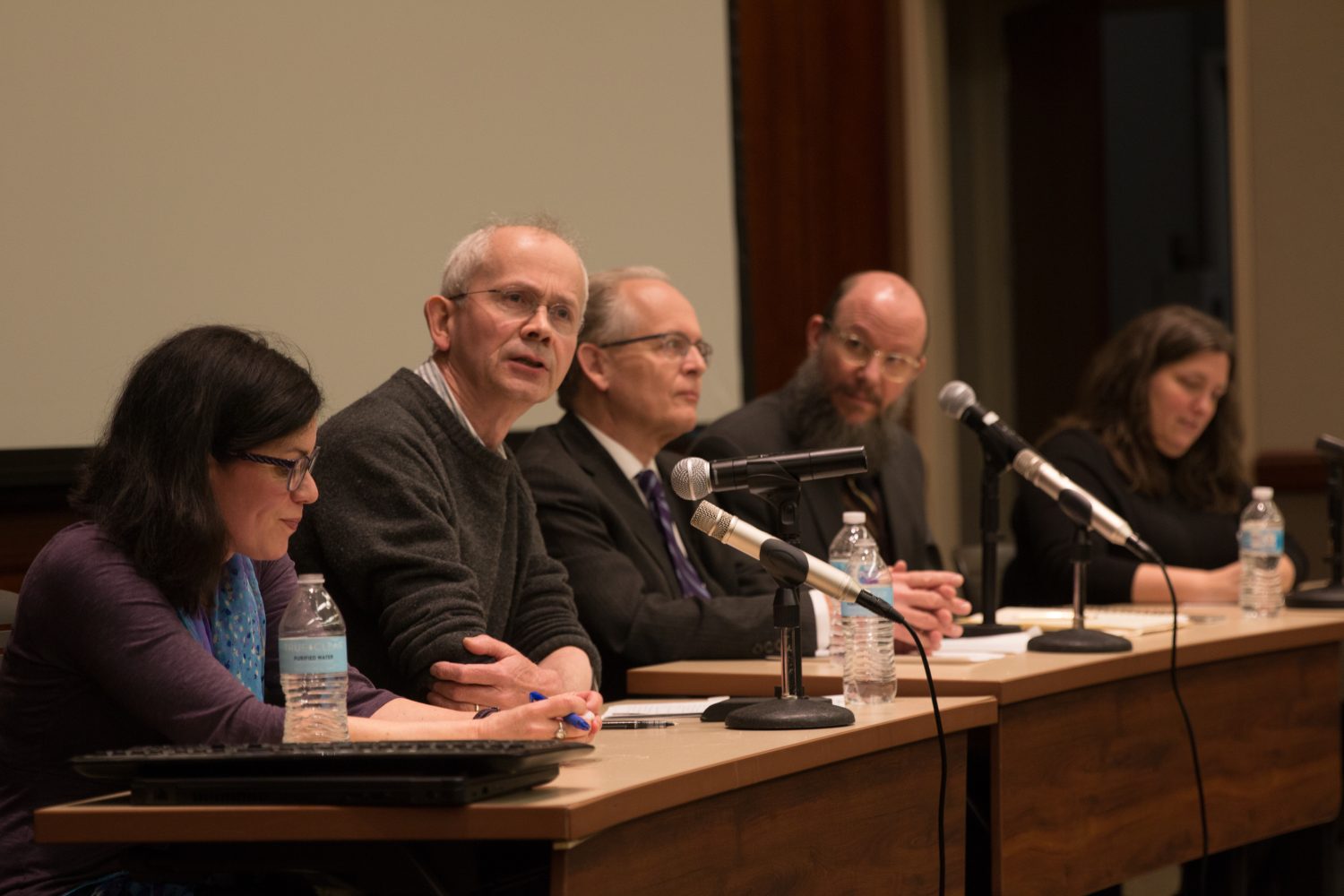
Listen to the symposium as a podcast episode. You can subscribe to the Lumen Christi Institute Podcast via our Soundcloud page, iTunes channel, Stitcher, TuneIn, ListenNotes, Podbean, Pocket Casts, and Google Play Music. To view photos of the symposium, visit Lumen Christi’s Facebook page. Free and open to the public. Cosponsored by the Zygon Center for Religion and Science, the Seminary Coop Bookstore, and the Society of Catholic Scientists. Persons with disabilities who may need assistance should contact us at 773-955-5887 or by email. This program is made possible by a grant from the John Templeton Foundation and a Lemaître grant from the Magi Project. Copies of Prof. Sideris’s…
On Bones and Genomes: What Can Science Tell Us About Being Human?
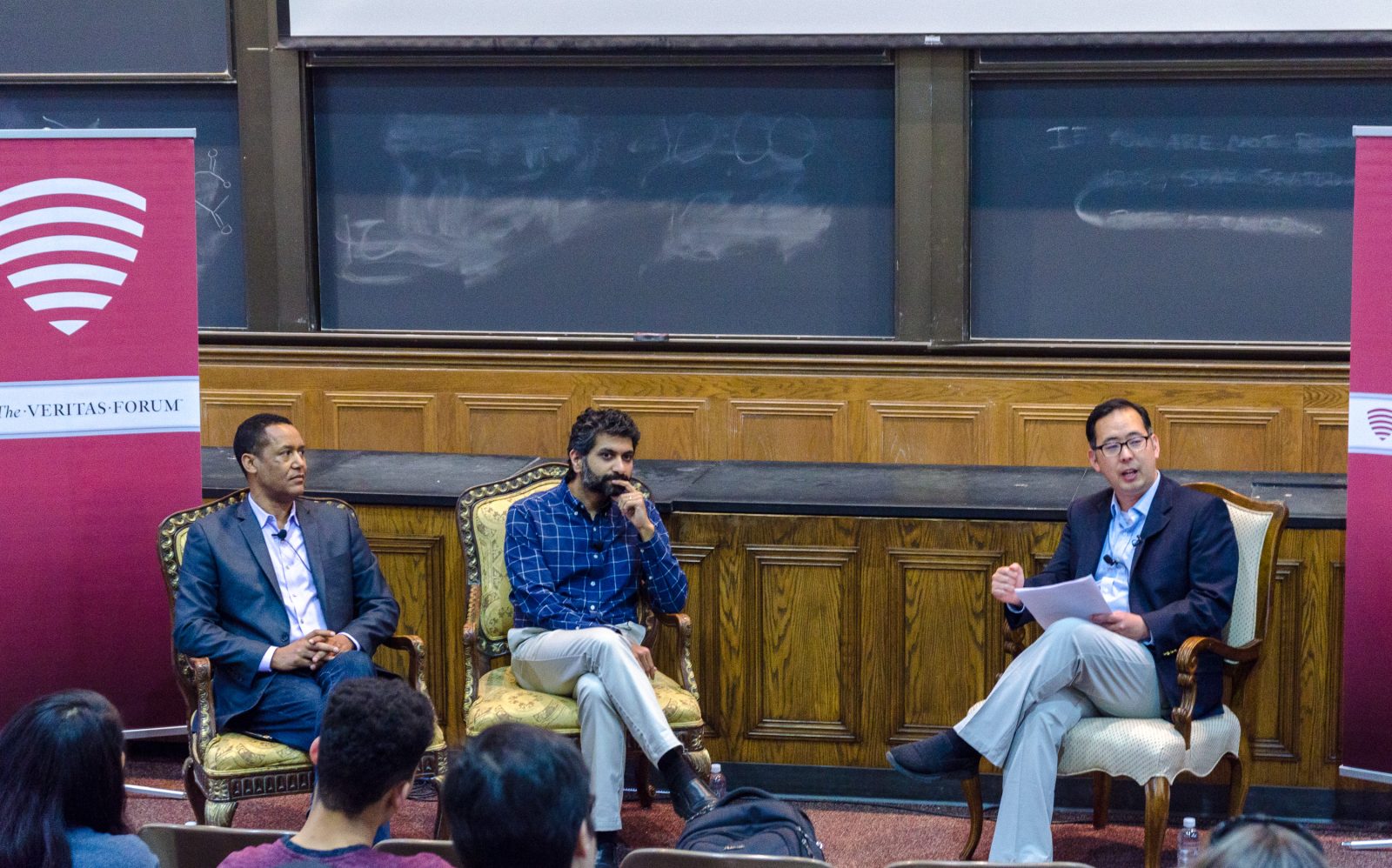
To view photos of the conversation, visit Lumen Christi’s Facebook page. Free and open to the public. Part of the Lumen Christi Institute’s “Science and Religion: A Dialogue of Cultures” project generously supported by the John Templeton Foundation. Presented by the Veritas Forum at the University of Chicago, the Martin Marty Center, Cana, Cru, the Graduate Christian Fellowship, Holy Trinity Church, InterVarsity Christian Fellowship, Living Hope Church, the Lumen Christi Institute, the Program on Medicine and Religion, and the Zygon Center for Religion and Science. Recent advances in science and technology have made great strides in addressing some of our…
Saving Darwin’s Soul and Science’s Life
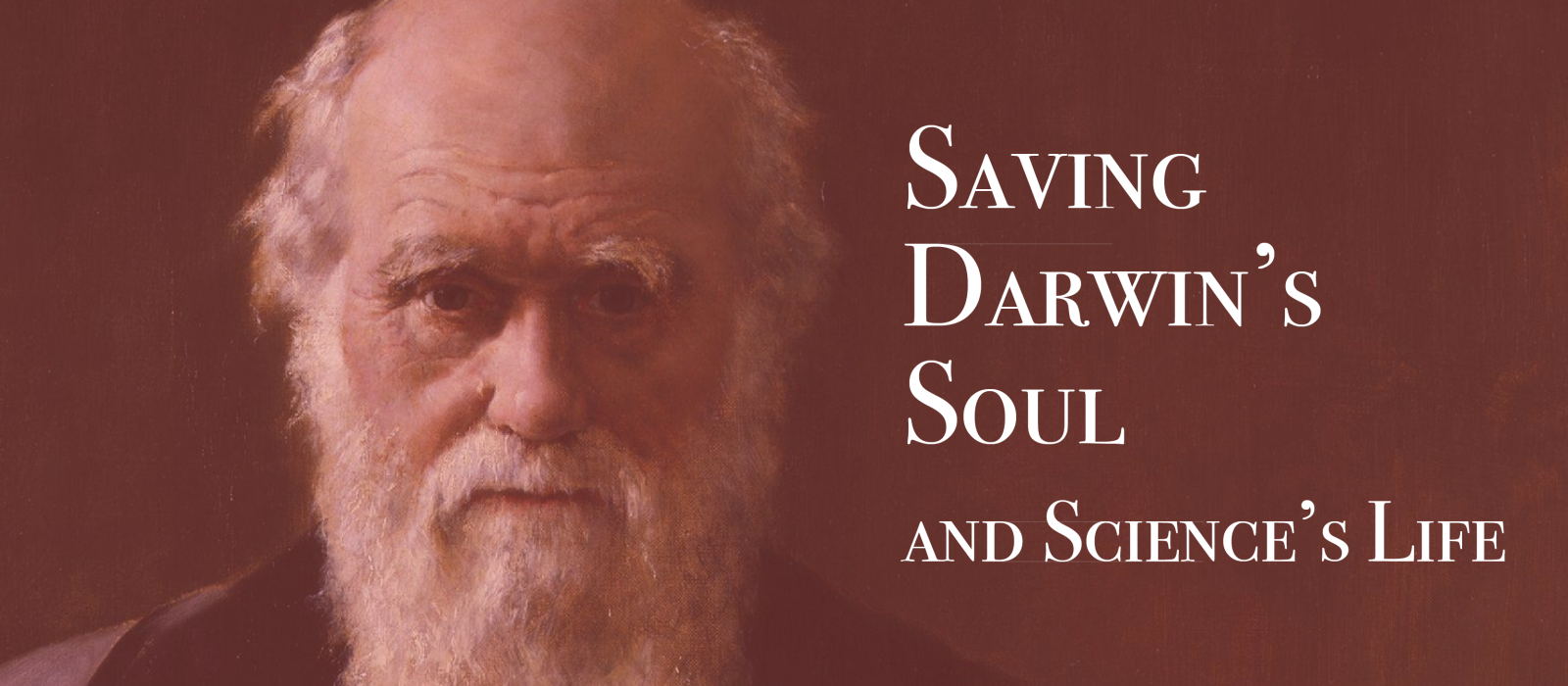
$25 General / Free for current students with ID $500 Host Committee (includes 10 tickets) / $2,500 Event Vice-Chair (includes 10 tickets) / $5,000 Event Chair (includes 10 tickets). This program is made possible by a grant from the John Templeton Foundation and is cosponsred by the Society of Catholic Scientists. 5:30pm Hors d’oeuvres reception 6:30pm Talk and Q&A 7:30pm Close The late 19th century witnessed the invention of what is now a well-worn trope: Science versus Religion. From this contrived construction modern fundamentalism was born: Scientific, Religious, and Philosophical. Such fundamentalisms spawned artificial ghettos of specialization that encouraged ambitions for totalizing disciplines. Darwinism was…