
The Catholic Roots of Religious Freedom
Co-sponsored by the St. Thomas More Society The roots of modern ideas of religious freedom are as much religious as they are political and philosophical. The American political leaders who first championed these ideas were well aware of the religious sources supporting their views. This lecture explores how early Christian thinkers developed a theological understanding of religious freedom.
The Unintended Reformation”
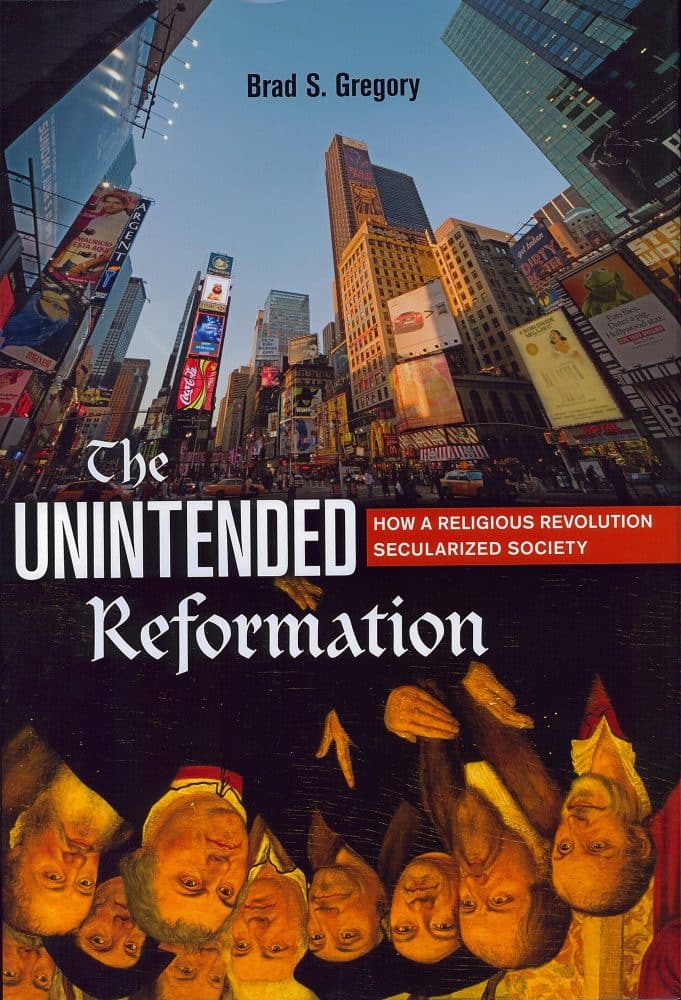
Co-sponsored by the Department of History and The Early Modern Workshop In his latest book, The Unintended Reformation, Brad Gregory identifies the unintended consequences of the Protestant Reformation and traces how it has shaped the modern condition. He argues that hyperpluralism, an absence of a shared sense of the common good, and the triumph of consumerism are each the long-term effects of a distinctive religious movement that marked the end of a period of history in which Christianity provided a framework for a shared intellectual, social, and moral life in the West.
Toward a Moral Economy: Policies and Values for the 21st Century

Keynote Address: Reinhard Cardinal Marx, Archbishop of Munich Presentations: Roger Myerson, University of Chicago, Kevin M. Murphy, University of Chicago, and Russell Hittinger, University of Tulsa This event opens the Fourth Lumen Christi Institute Conference on Economics and Catholic Social Thought and inaugurates the Institute Collaboration with the German-American Colloquium of the Katholische Sozialwissenschaftliche Zentralstelle. Co-sponsored by the Katholische Sozialwissenschaftliche Zentralstelle and The John U. Nef Committee on Social Thought As the United States and the global economy continue to reel from the effects of the 2008 financial crisis, we face several questions: What went wrong? How to prevent another such…
“Religious Freedom in America Today”
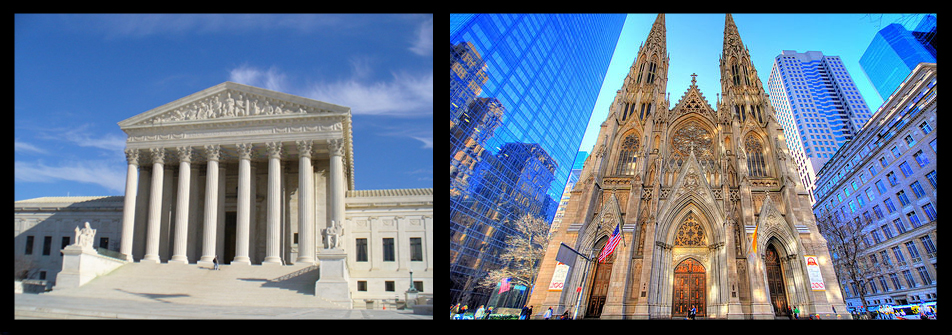
As President Clinton observed, “religious freedom is . . . our first freedom.” It was central to the Founders’ vision for the American political community. They did not always agree about what religious freedom means or requires, but they knew that it matters, and that it should be respected in policy and protected by law. James Madison, the Father of our Constitution, hoped that America’s religious-liberty experiment promised a lustre to our country. This lecture will take stock of this experiment and consider the rights of religious believers and institutions and their roles and voices in American public life today. Co-sponsored…
“The Second Vatican Council and the Church’s Engagement with the Modern World”
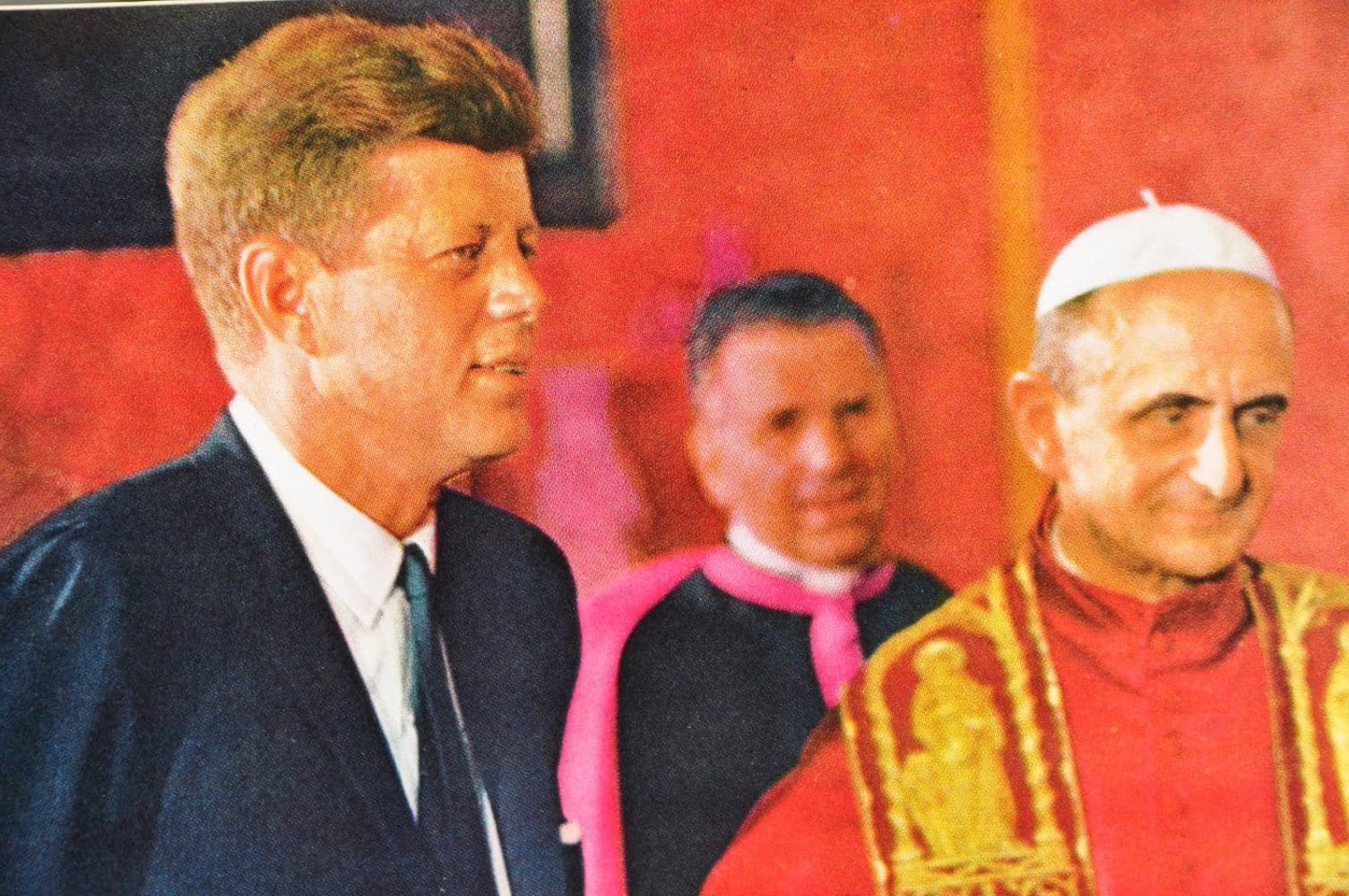
Cosponsored by the University of Chicago Ethics Club After decades of ideological upheaval that often placed the Catholic Church in conflict with modernity, Pope John XXIII convened the Second Vatican Council in part to open a dialogue with modern culture. This lecture will reflect on the theological developments that led to Vatican II’s Pastoral Constitution on the Modern World, Gaudium et Spes, the document’s text itself, and the history of its reception, and offer a perspective on the current health of the Church and its prospects for bringing the light of Christ to the world.
“Vatican II’s Declaration on Religious Liberty, 50 Years Later”
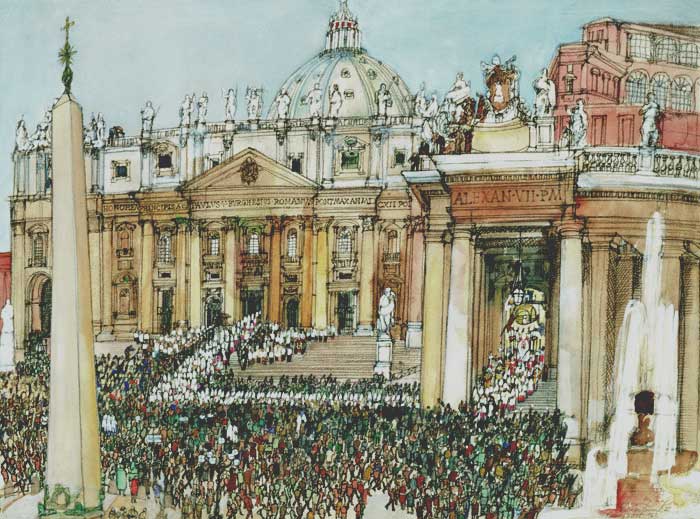
Cosponsored by The Department of History and The St. Thomas More Society At the third plenary session of Vatican II, Fr. John Courtney Murray said that the issue of religious liberty [is] the American issue at the Council. Yet it took the longest to write, and, after undergoing thousands of comments and corrections over four years, it was signed by Pope Paul VI less than twenty-four hours before the Council was adjourned. This lecture will consider, (1) the reasons for this Declaration on Religious Liberty and the difficulties and debates at the Council, and (2) how the doctrine of religious liberty has fared…
“The Dialogue of Economics and Catholic Social Thought”
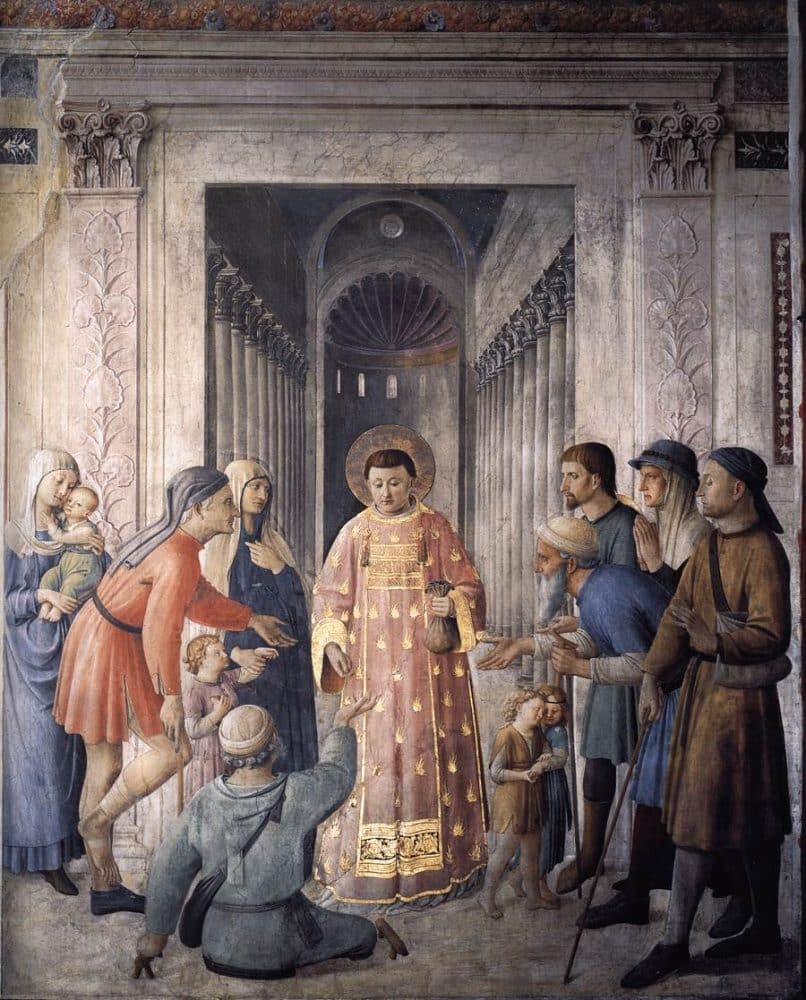
Cosponsored by the University of Chicago Ethics Club The presence of two Catholic candidates for vice-president have raised questions about Catholic social thought and American free market economics. In this symposium, an economist and a theologian consider how the Church’s teaching bears on contemporary economic questions. The questions to be explored will include: What does the Catholic social thought developed by popes from Leo XIII and Pius XI to John Paul II and Benedict XVI say about economic issues? How can economists engage the principles of Catholic Social Thought and reflect on questions such as the just wage, social solidarity and the market…
A Conversation on Faith and Science, with Mark Wyman and Minyoung Wyman
This event is intended for college students. Dinner will be served. Contemporary culture is built in part on a mythology of the natural sciences. This mythology characterizes Christianity, particularly Catholicism, as a reactionary force clinging to a pre-modern worldview that brave men and women have replaced with a modern, scientific one. Two postdoctoral researchers at the University of Chicago’s theoretical cosmologist and an evolutionary biologist will explain why this myth is false. Each will give a brief account of their own experience as scientists and reflect on the compatibility of faith and modern science. Ample time for questions and discussion will…
“Benedict XVI on the Liturgy”
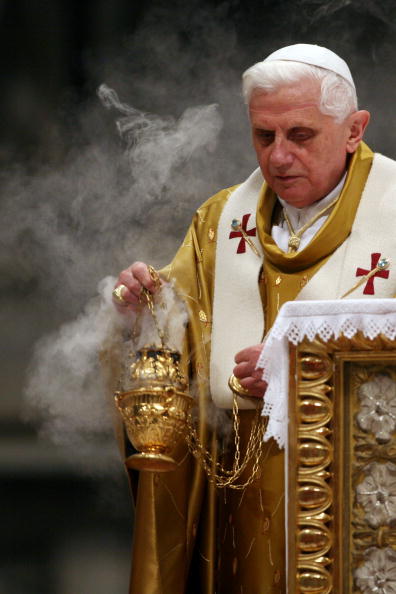
Joseph Ratzinger (Pope Benedict XVI) has long cherished Catholic liturgy, and his writings on the subject illuminate the man as well as the meaning of Christian ritual. This talk is intended as an introduction to the concept of liturgy as understood by Catholics and of the contributions Ratzinger-both as theologian and as worshiper-has made to its authentic development and reception within the Church. This event is intended for University students. An informal dinner will be served. Please contact mfranzen@lumenchristi.org with any questions.
“The Theologico-Political Problem Today”
Co-sponsored by the History of Christianity Club For three hundred years the modern nation-state appeared to determine the relationship between politics and religion. Indeed, the modern state was devised to solve this troubled relation. This is no longer the case. The present weakness of nations in discerning matters religious and theological, along with its cool disinterest in religion, presents a particular crisis for the Church. This lecture will consider the history of the theologico-political problem and address the condition of three essential institutions: marriage, polity and church.