
Aristotle’s Great-Souled Man in Jane Austen, Fyodor Dostoyevsky, and Saint Augustine

This event was co-sponsored by the Undergraduate Program in Religious Studies at the University of Chicago. Augustine famous referred to the classical virtues as “splendid vices”. Although he stood in the tradition that valued virtue, he was concerned that the pursuit of greatness through the life of virtue – a theme dating back to Aristotle’s ideal of the Great-Souled Man – could actually breed a sense of self-righteousness. Yet there is much to the Aristotelian ideal. The pursuit of greatness in the service of God seems preferable to complacent mediocrity that sadly characterizes so much of our life. This lecture,…
Catholicism: A Global History from the French Revolution to Pope Francis
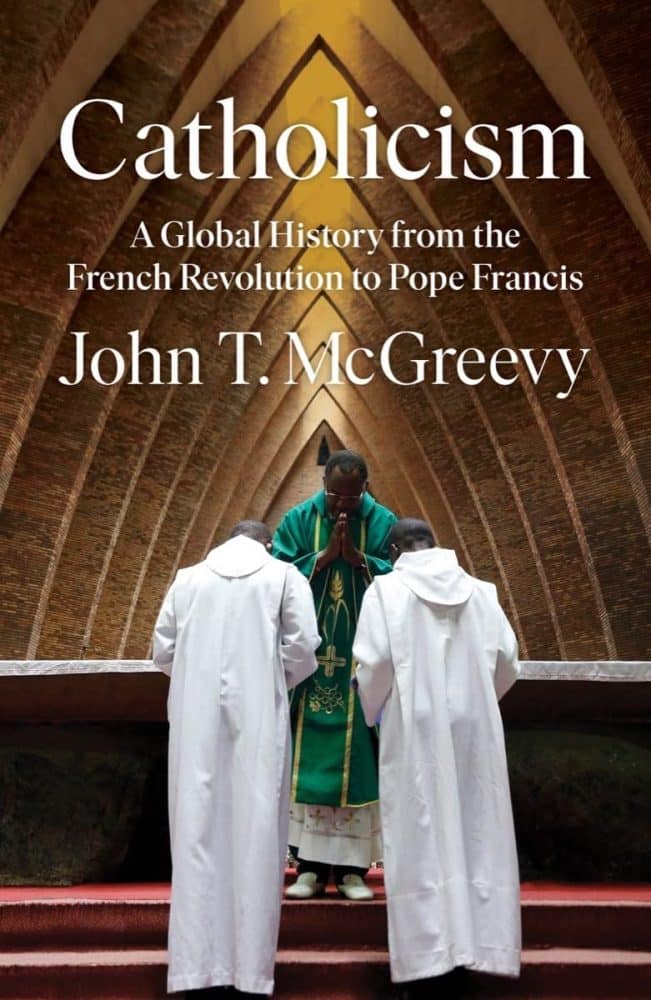
This event is free and open to the public. For more information, contact info@lumenchristi.org. This event is co-sponsored by the History Department at the University of Chicago. The story of Roman Catholicism has never followed a singular path. In no time period has this been more true than over the last two centuries. Beginning with the French Revolution, extending to the Second Vatican Council in the 1960s, and concluding with present-day crises, John T. McGreevy chronicles the dramatic upheavals and internal divisions shaping the most multicultural, multilingual, and global institution in the world. In his latest book, John McGreevy gives a magisterial history…
Master Class on “Catholicism and Upheaval Between the World Wars”

Open to current students and faculty. Others interested in participating should contact info@lumenchristi.org. All registrants will receive pdfs of the selected readings, which should be read in advance of the class. The first 20 registrants will receive a free copy of Catholicism: A Global History from the French Revolution to Pope Francis. This Master Class will use a mix of primary and secondary sources to examine global Catholicism in the thirty years preceding the opening of the Second Vatican Council in 1962. Themes include the political crisis of the 1930s and the turn toward democracy, Catholicism and post WWII decolonization and the “return to…
Graduate Reading Group on “The Works of Frederick Douglass”
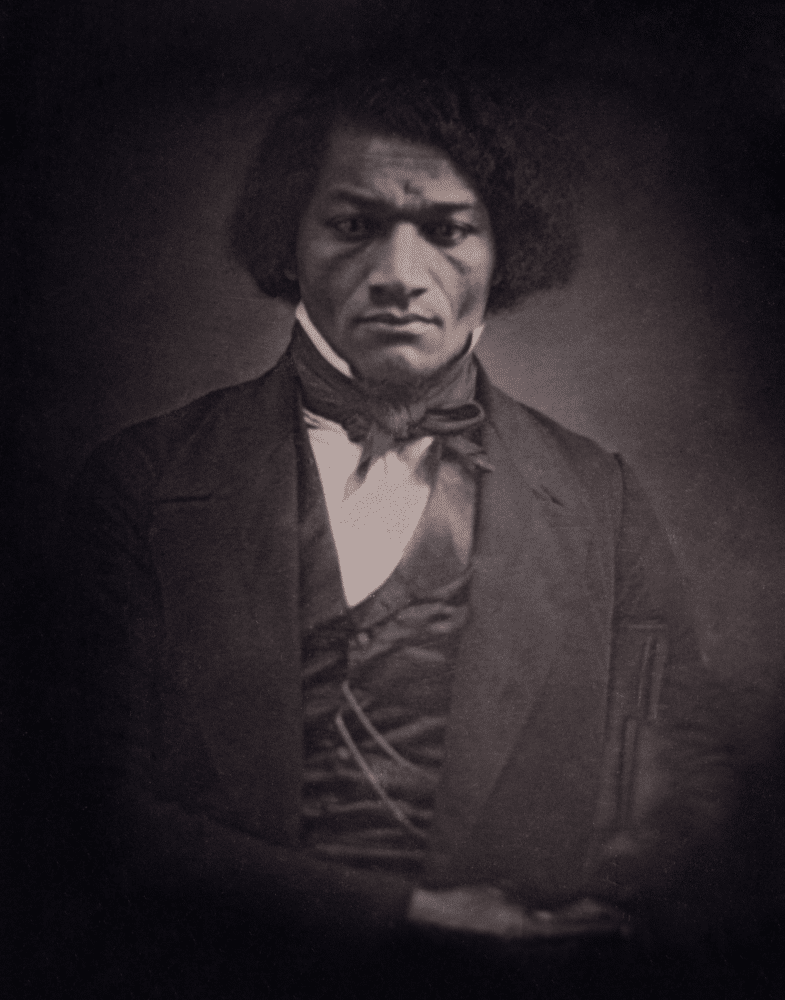
Open to current graduate students students at the University of Chicago. Participants can come to whichever sessions they choose. Others interested in participating should contact info@lumenchristi.org. Wine and cheese reception to follow. Frederick Douglass is, without a doubt, a great American writer and orator. Largely self taught, he wove together the traditions of American rhetoric and law, sacred scripture, classical insight, and the romantic language of his age. In so doing, he became a voice of conscience for the United States, a leading light in the abolition movement, and one of the most famous and respected men of his age–of…
Catholic Culture Series on “A Catholic Vision of the Person and the World”
The Lumen Christi Institute’s West Suburban Catholic Culture Series returns in 2023 with a monthly series on the theme of “A Catholic Vision of the Person and the World.” REGISTER HERE THEME | In a 1965 address to the United Nations General Assembly, Pope Paul VI described the Catholic Church as “an expert in humanity.” The Church could teach the U.N. because the Church understood human hearts and human institutions. Bishop Robert Barron has explained the pope’s words in the following manner: “The Church has two thousand years of watching the human condition unfold – two thousand years of saints and sinners,…
Dante and a Poet’s Journey in Hope
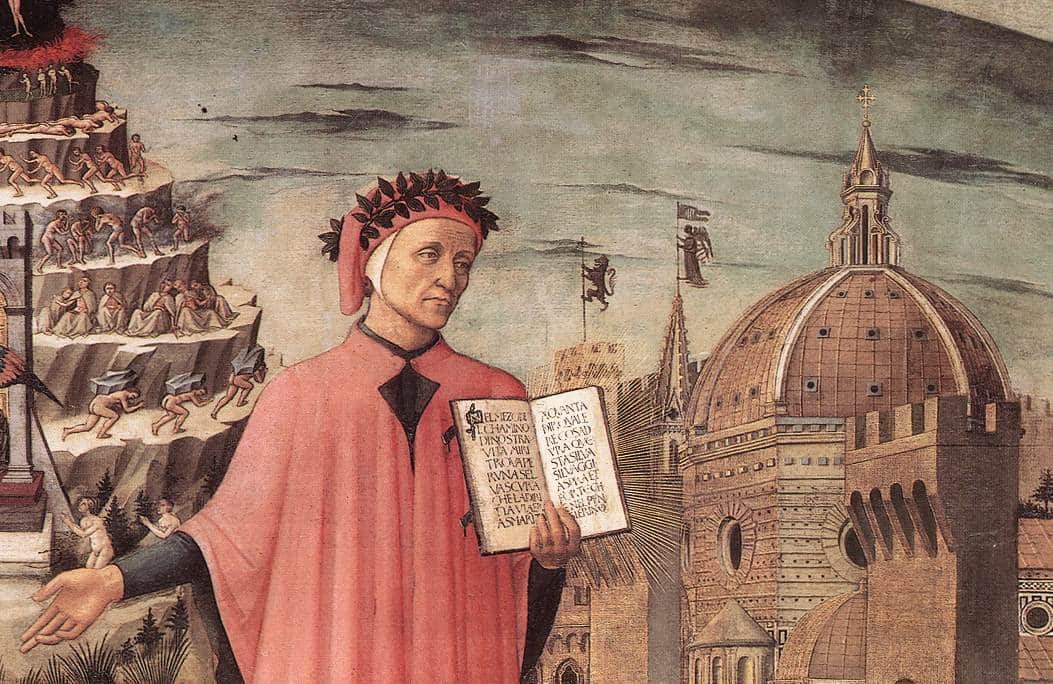
REGISTER HERE This event is free and open to the public. For more information, contact dstrobach@lumenchristi.org. A wine and cheese reception will follow. This event is cosponsored by the University of Chicago Committee on Social Thought, the Department of Romance Languages and Literatures, and the Medieval Studies Workshop. Often praised for its evocative treatment of heaven and hell, Dante’s Commedia is a significant work of theology. Denys Turner will explain how Dante accomplishes by means of poetry what the formal theological treatises of the Middle Ages demonstrate through prosaic inference and proof. Poetry, Turner argues, is the most natural language to articulate…
The Bond of All Creation: Renaissance Humanism and the Incarnate Word – Faith and Reason | West Suburban Catholic Culture Series
-1387x1000.jpg)
The Italian Renaissance rarely plays a central role in our understanding of the story of Catholic theology, even though many of us love Renaissance art and literature. In this talk, Dr. Gaetano will show how philosophers, poets, and painters of this era saw faith and reason as “two wings on which the human spirit rises to the contemplation of truth.” Key figures of the Italian Renaissance such as Petrarch, Marsilio Ficino, Giovanni Pico, and Raphael went back to the sources in Greek antiquity and found in Plato a yearning for the divine Logos or Word, a Word only fully revealed in the Incarnation of Jesus Christ.
Is Christianity a Slave Morality? Max Scheler on Ressentiment
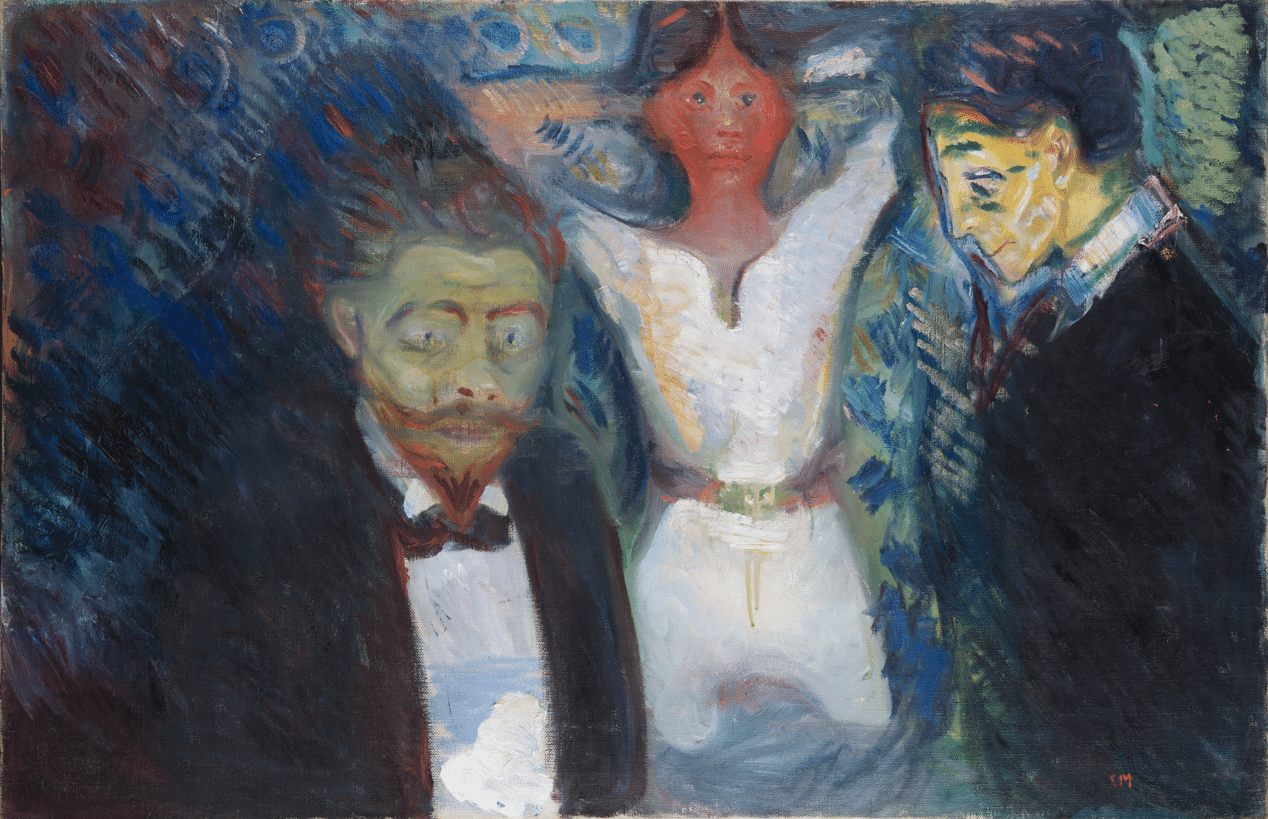
REGISTER HERE Open to current graduate students and faculty. Advanced undergraduates and others interested in participating should contact dstrobach@lumenchristi.org. This event is in-person only. All registrants will receive copies of the selected readings, which should be read in advance of the class. An optional wine and cheese reception will follow. This event is made possible through the support of ‘In Lumine: Supporting the Catholic Intellectual Tradition on Campuses Nationwide’ (Grant #62372) from the John Templeton Foundation. In his book Ressentiment, the German philosopher Max Scheler deepens Nietzsche’s account of ressentiment, the life-denying disposition of spite, envy and revenge. Nietzsche finds this spiritual sickness to be…
Civilization on the Brink? Modern Philosophy and the Abolition of Man
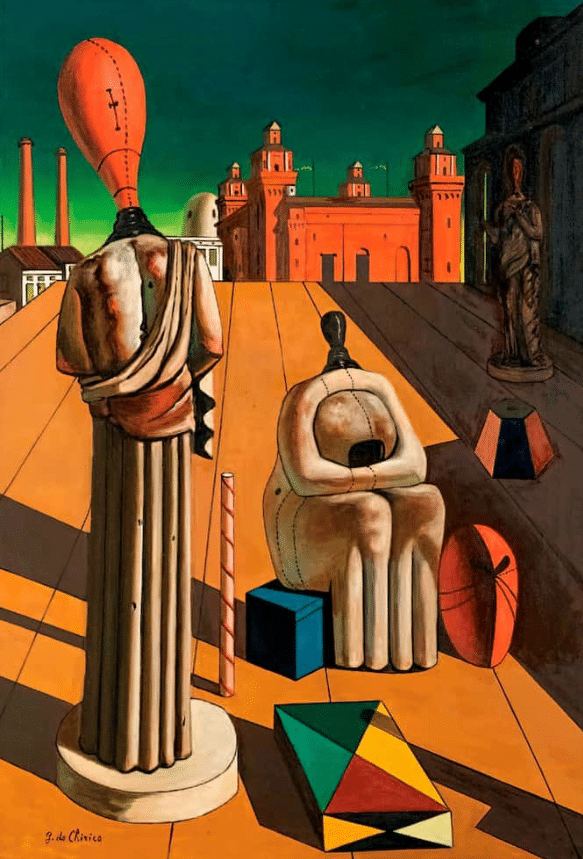
Open to current undergraduate students at the University of Chicago. Registration is capped at 25. Students who register after capacity has been reached will be put on a waitlist. All registrants will be provided with a free copy of the text. This seminar and the Nicklin Fellows are cosponsored by the First Analysis Institute, and this event is made possible through the support of ‘In Lumine: Supporting the Catholic Intellectual Tradition on Campuses Nationwide’ (Grant #62372) from the John Templeton Foundation. REGISTER HERE In 1944, CS Lewis looked upon civilization and was amazed by what he saw: In a sort of ghastly…
Literary Traditions and the Pursuit of Truth: A Culture of Humility – A Catholic Vision of Culture in the 21st Century | West Suburban Catholic Culture Series
The challenges of our times can make Christians feel embattled and besieged. But the Catholic intellectual tradition, at its best, equips us to look with openness for the Truth, incarnate in the world around us. In this lecture, Prof. Emily Austin will share her perspective as a classicist, reading within a literary tradition. To read within a tradition requires patience and attentiveness, allowing each text to teach you how to read anew. She will argue that a Catholic literary culture requires—and fosters—humility. The pursuit of Truth is most productively sought, in a literary context, within a community of friends