
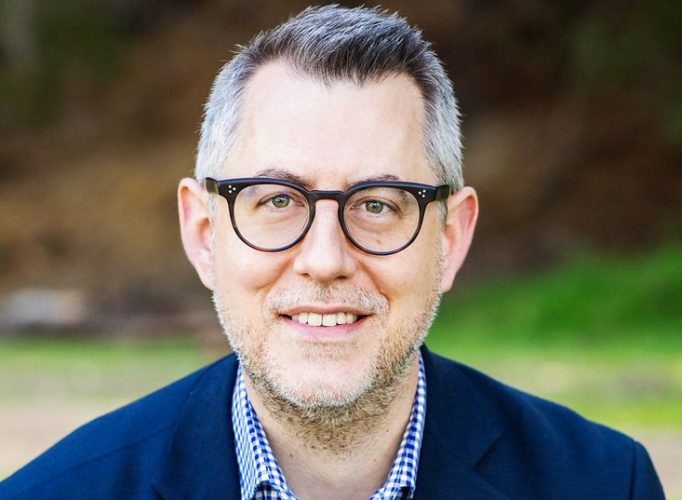
Each quarter, LCI reaches out to one of our alumni and catches up with them about where their career has taken them since their involvement in LCI programming as a graduate or undergraduate student. This fall, LCI staff spoke with David Albertson, an Associate Professor of Religion and Philosophy at the University of Southern California and director of The Nova Forum. He graduated from the University of Chicago Divinity School with an MDiv in 2003 and a PhD in 2008.
When did you get involved with LCI as a student?
I first heard of Lumen Christi through friends at the Divinity School, or perhaps it was through Professor Bernard McGinn, who was an important mentor for me at the time. The first event I participated in was a small reading group organized by Thomas Levergood in the basement of Calvert House, on Gregory of Nyssa, I think. I found it a valuable intellectual community of faithful Christians who wanted to learn from the tradition outside of course requirements. I remember being impressed by how smart the other students were! And of course by Thomas himself personally, and his evident love for the Church.
What is your favorite memory of LCI as a student?
I enrolled in classes with Professor Jean-Yves Lacoste and read Kierkegaard and Balthasar with him in university courses as part of my graduate studies at Chicago. Lumen Christi had brought in Lacoste from Paris as a visiting professor of Catholic Studies. Both of those courses were transformational for me as a thinker and continue to stimulate my work today, 20 years later. It offered a whole dimension of encounter with the Catholic tradition that otherwise would not have been on my map as a PhD student studying Christianity. In fact I am working on a paper on Balthasar right now that stems from that encounter.
How did LCI impact you as a student and in your subsequent career?
Lumen Christi impressed me with its high standards for intellectual inquiry. Its lectures and guest scholars were always world-class. At the time I was still Protestant, but it demonstrated without a doubt that Catholic intellectuals were serious about thinking with excellence and open to pursuing truth wherever it led. I think this was the beginning of an intellectual conversion for me — much as Augustine first gained respect for Catholic Christianity philosophically, before he fully embraced the Church and converted. Lumen Christi made that first step possible for me by incarnating the voice of the Catholic intellectual tradition, so that it could be an ineluctable part of my own intellectual formation as a scholar and a person.
Tell us about the Nova Forum.
I founded Nova Forum in 2020 after several long conversations with Thomas Levergood. Since 2018 or 2019 I had wanted to contribute something to our Catholic students at USC and greater Los Angeles. After discernment and discussions with Thomas and others, I decided to affiliate Nova Forum from day one with the emerging In Lumine Network. With their support, we have grown more quickly and broadly than I would ever have guessed was possible. Now I have the privilege of working collaboratively with six faculty fellows to serve our large community of students at our Catholic campus ministry but also in public events on USC campus. Because of our size (40,000), USC likely has as many Catholic students as Notre Dame or Georgetown.
We try to sustain the Lumen Christi model of being the voice of the Catholic intellectual tradition on our secular university campus, maintaining the highest academic standards while working to ameliorate the polarizations of the American church. Our programs seek to bridge the life of faith and the life of the mind, but also to introduce Catholic traditions to students who may be entirely unaware of them. Our programs try to fulfill these criteria: they are holistic learning experiences that draw from the riches of the Catholic tradition, address topics the university does not pursue on its own, and land fully in our century with relevance, urgency, and complexity. We want students to get a taste of thinking with the Church (sentire cum ecclesia) and experiencing how it can add to their understanding of the world, their lives, and our common good.
Can you tell us a bit about the summer seminar on Charles Taylor you co-hosted with LCI?
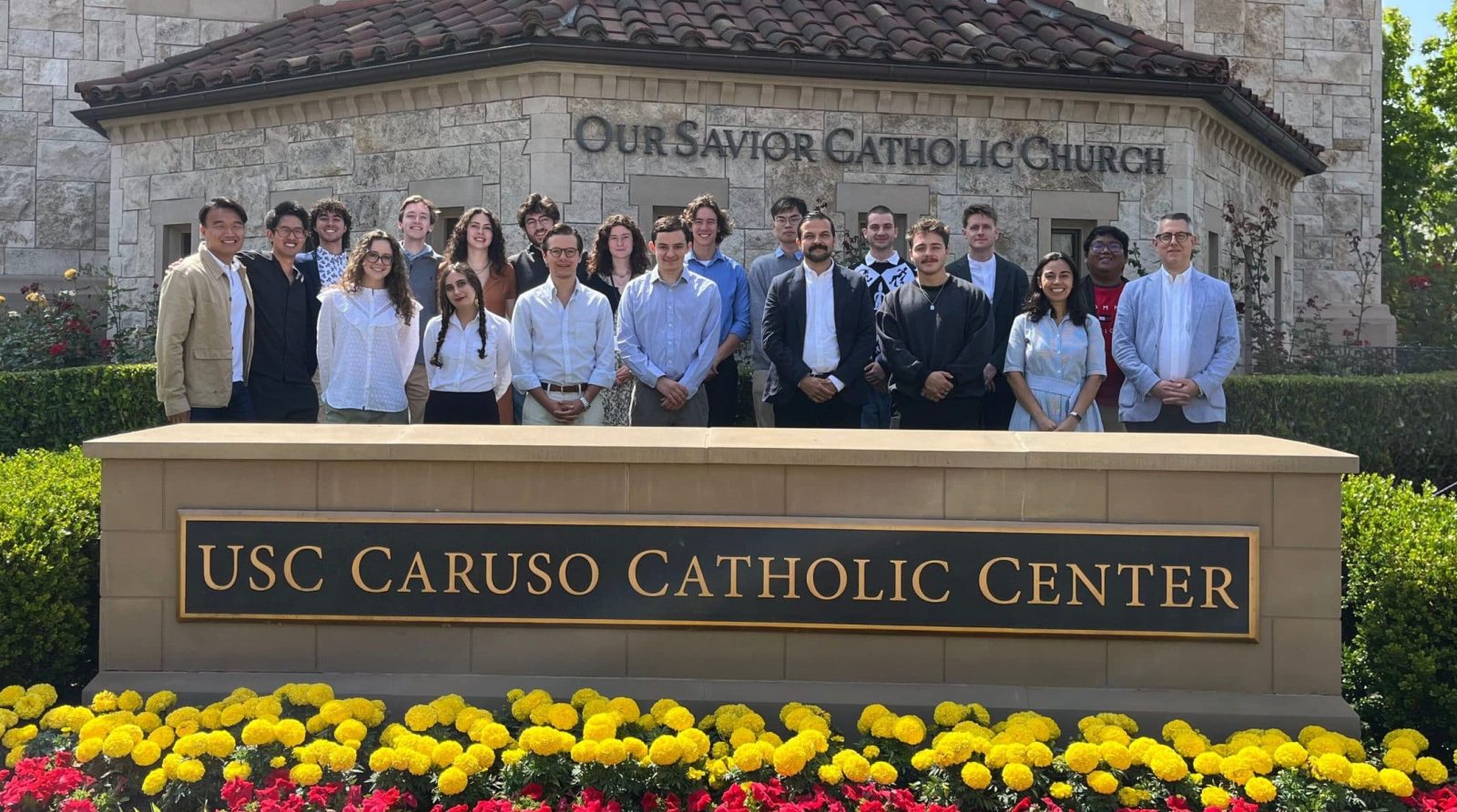
Nova Forum was delighted to host the Charles Taylor seminar in summer 2024. It was conceived, designed, and taught by my good friend and colleague Professor Jason Blakely from Pepperdine University nearby in Los Angeles. Taylor is indubitably one of the most prominent Catholic philosophers of our era, with very few peers. We thought it would be a perfect introduction to a Catholic intellectual style that is open to modernity and yet understands the meaning of that modernity from within the vantage point of Catholic tradition. To me, the idea of reading Taylor in Los Angeles, at the crossroads of so many cultures, such religious diversity, and such technology, seemed a perfect match.