The West Suburban Catholic Culture Series
Ever Ancient, Ever New:
The Sources of Pope Leo XIV
REGISTER HERE
September 10th:
“In the One, we are One”: Christian Unity and the City of God
Schedule: 6:30 p.m. Drinks | 7:00 p.m. Dinner, Lecture, & Q&A | 8:30 p.m. End
LECTURE DESCRIPTION
In the City of God, Augustine eloquently speaks about “two cities” that are divided by their two loves. In God’s city, there are angels and humans united in their love of God. In the earthly city, there are demons and humans united in their devotion to their own wills. For Augustine, the city of God on earth is the Church, but in this life it is a church which intermingles citizens of the two cities. It is a church on pilgrimage which longs to be fully united and secure with the heavenly city of God. But even now, in the Eucharist and in the miraculous intercession of the saints, the Church can achieve a foretaste of the unity it will experience in heaven.
(Business casual attire encouraged. For questions, please email Margaux (Killackey) Taffet at mkillackey@lumenchristi.org).
SERIES DESCRIPTION
Since the election of Pope Leo XIV on May 8, 2025, Catholics and non-Catholics alike have wondered what kind of a Pope he would be. Perhaps the best perspective on that question may be found in two of his most consequential decisions, both of which were highlighted in his first remarks from the balcony of St. Peter’s Basilica in Rome.
First, at the age of 22, Robert Prevost entered the Augustinian order. As “a son of St. Augustine,” he is guided by the spirituality of that great 5th century Western Doctor of the Church whose thought has shaped Catholic doctrine and philosophy since that time. Augustine lived in a time of intense political upheaval as the mighty Western Roman Empire was falling. Old things of seemingly invincible splendor were collapsing. And the new thing of Christianity was transforming the world at an astonishing pace.
Secondly, in choosing the name Leo, our new Pontiff consciously placed himself in the line of several consequential popes of that name. The most recent, Leo XIII, Pope from 1878 through 1903, is celebrated for his seminal writings on contemporary Catholic social doctrine. The best known of these, Rerum Novarum, references the “new things” facing the Church and the world in the wake of decades of technological, political, intellectual and religious revolution.
The new Pope’s first remarks following his election hinted at the trajectory of his papacy by tapping into two deep wells of patristic and papal teaching. In this, the sixth season of the West Suburban Catholic Culture Series, our speakers will explore some of the most significant writings of St. Augustine and Pope Leo XIII in light of the influence they may have on the new Pope’s priorities. Like both of these men, this Pope faces a time of roiling social change. Like them, he faces a world in which old things are passing and new things are afoot. These sources may help us understand how Pope Leo seeks to carry the Church forward in a world such as ours.
CALENDAR
September 10: “In the One, we are One”: Christian Unity and the City of God
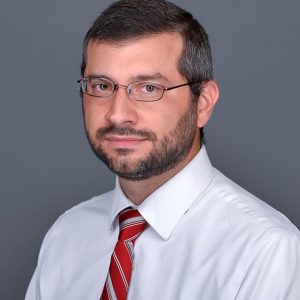
Jared Ortiz (Van Kley Professor of Religion and Department Chair, Hope College; Founder and Executive Director, St. Benedict Institute at Hope College)
October 15: Our Hearts are Restless: Augustine’s Confessions and Modern Anxiety
Scott Moringiello (Associate Professor in Catholic Studies, DePaul University; Scholar-in-Residence at St. Gregory Hall)
November 12: Unless You Believe, You Will Not Understand: Augustine’s Theory of Education
Erika Kidd (Associate Professor, Catholic Studies, University of St. Thomas)
March 18, 2026: On New Things: Rerum Novarum and the Foundations of Catholic Social Thought
Speaker To Be Announced
April 15, 2026: The Kingdom of Heaven is like a Mustard Seed: Development in Catholic Social Thought
Speaker To Be Announced
May 13, 2026: The Gospel’s Response to the “Fatigue of Living”
Speaker To Be Announced