REGISTER BELOW
2:00-5:00 (Detailed Schedule Below) | Refreshments Provided
This event is designated for current graduate & advanced undergraduate students and faculty from the University of Chicago & regional colleges and universities. Others interested in auditing should contact William Hurley at whurley@lumenchristi.org.
This project is made possible through the support of In Lumine Tuo: Expanding and Sustaining the Catholic Intellectual Tradition Nationwide (grant #63614) from the John Templeton Foundation and the generous support of our donors.
Description:
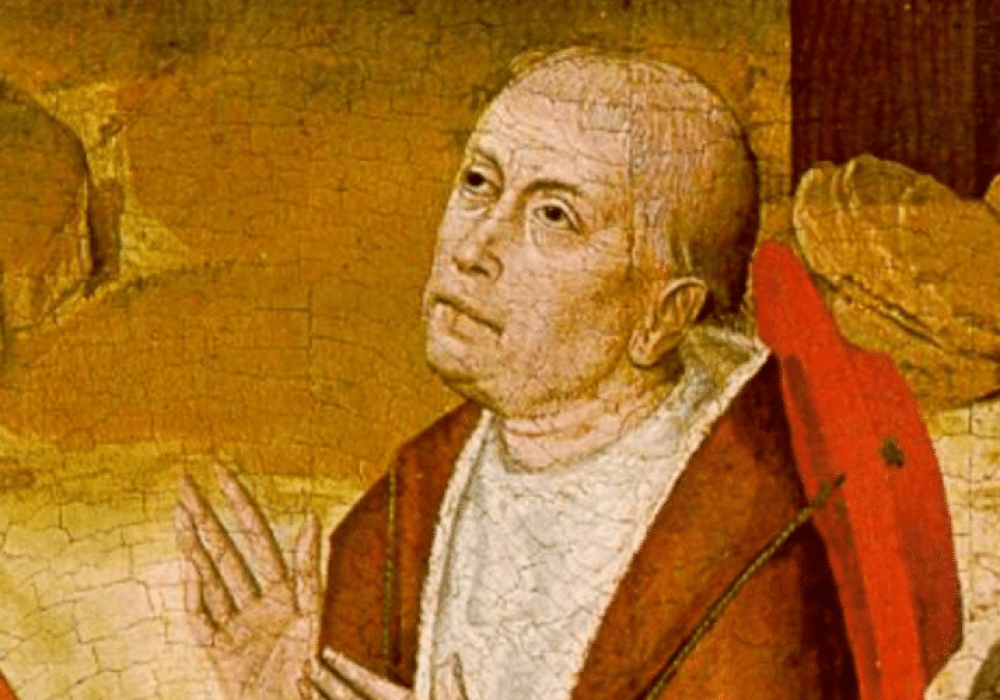
Is measuring the natural world a secular activity, or does wonder enliven faith in the mystery of God? Nicholas of Cusa (1401-1464) was a reformist cardinal who wrote profound treatises in mystical theology in his spare time. He is arguably the most brilliant Christian thinker of the fifteenth century. For Nicholas, engaging in natural science not only deepens wonder at the cosmos and Creator, but spurs one to find God in the limits of human knowing. Mathematical thinking leads directly to theology. We will explore key passages in De docta ignorantia (1440) and De visione dei (1453) that continue to draw the attention of philosophers and theologians today.
Readings: (all from CWS book; I might bring an extra one-page handout with selected paragraphs from later works)
- On Learned Ignorance, Book I (I.1-4, I.11-I.17, I.24-26), pp. 87-92, 100-110, 121-127 (21 pages)
- On Learned Ignorance, Book II (II.1-3, II.13), pp. 127-137, 166-169 (13 pages)
- On Learned Ignorance, Book III (III.1-4), pp. 169-180 (11 pages)
- Optional: On the Vision of God: Preface, Chs. 1-6, Ch. 15 (pp. 235-245, 262-265) (13 pages)
Schedule:
- 1:30pm – Optional Coffee and Pastries
- 2:00pm – Session I begins
- 3:20pm – Break
- 3:40pm – Session II begins
- 5:00pm – End / Wine & Cheese Reception
Event Type:
Master Class
Each quarter, the Lumen Christi Institute hosts a master class at Gavin House (1220 E 58th St.). A master class is a seminar in miniature, in which top scholars introduce students to a major figure or concept in the Catholic intellectual tradition. The two eighty-minute sessions contain a mixture of lecture, seminar discussion, and close reading. All participants are provided a copy of the text under consideration. Any student interested in a shared reading of a great text is welcome to join. No religious affiliation is necessary.