
[Message from our Executive Director, Daniel Wasserman-Soler]
Dear friends,
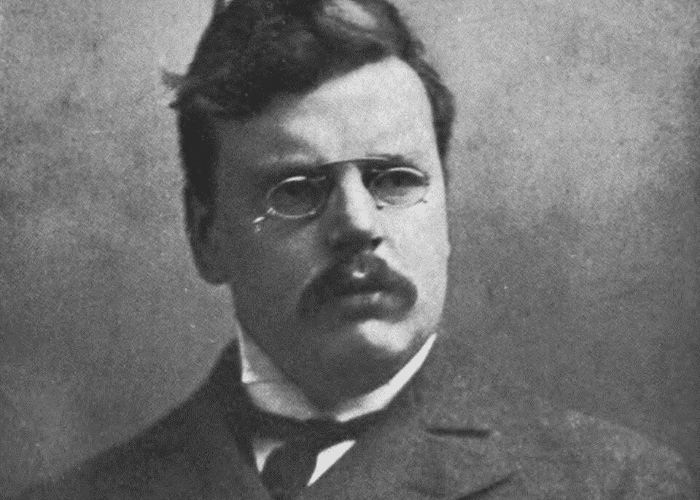
G.K. Chesterton once remarked that “thanks are the highest form of thought.” The quote comes from chapter six of his 1917 Short History of England. Written with his characteristic common sense, Chesterton (1874-1936) described the book as a “popular essay in English history,” making “no pretense to particular scholarship.” In his view, other histories had taken an overly narrow approach in studying the English Middle Ages. With his memorable sense of humor, Chesterton argues that the medieval English people actually drew not only on their Saxon roots but also on a broader range of external influences:
I do not, in my private capacity, believe that a baby gets his best physical food by sucking his thumb; nor that a man gets his best moral food by sucking his soul, and denying its dependence on God or other good things. I would maintain that thanks are the highest form of thought; and that gratitude is happiness doubled by wonder. But this faith in receptiveness, and in respect for things outside oneself, need here do no more than help me in explaining what any version of this epoch ought in any case to explain […] And in nothing were the mediaevals more free and sane than in their acceptance of names and emblems from outside their most beloved limits. The monastery would often not only take in the stranger but almost canonize him.
For Chesterton, the medieval English people showed both faith and wonder in what they received from outside their island. They took in the stranger; they freely accepted names and symbols from other cultures. He would add that “England, like every Christian thing, had thriven on outer things without shame. From the roads of Caesar to the churches of Lanfranc, it had sought its meat from God.” In short, to wonder at God’s gifts is to show gratitude for them. Happy Thanksgiving.
Yours in Christ,
Daniel Wasserman-Soler
Executive Director
Lumen Christi Institute