
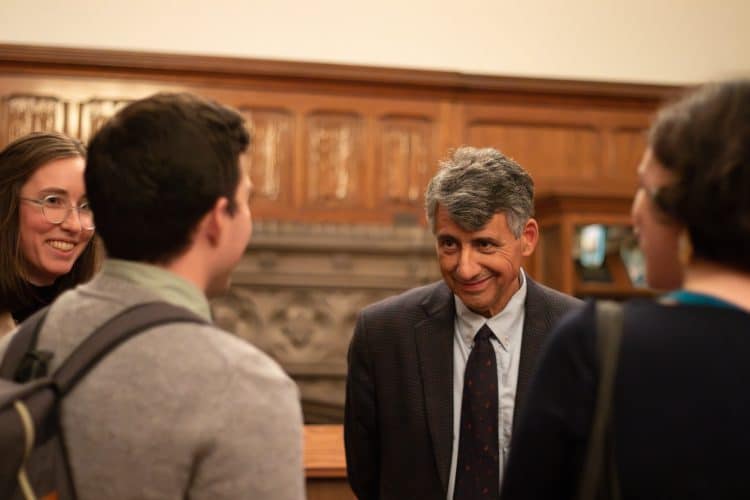
One afternoon in 2000, Peter Casarella received a phone call. At the time, he was an assistant professor of theology at the Catholic University of America in Washington, D.C. The number that appeared on the caller ID was from Chicago. The voice on the other end introduced himself as Thomas Levergood, the founder of a new Catholic initiative called ‘The Lumen Christi Institute.’ He had a favor to ask.
“He called me up to help him with this event,” Casarella explains. Levergood had founded the Lumen Christi Institute three years before and he was scheming to bring it to the next level with a major event featuring Cardinal George, then archbishop of Chicago, and the eminent theologian David Tracy. Casarella knew Tracy. “Thomas thought I could be a middleman. And he was right.”
The event was a success and helped lift the Lumen Christi Institute to greater visibility in Chicago and in Catholic intellectual circles more broadly. It also sparked a friendship between Casarella and Levergood. When Casarella moved to Chicago in 2007 for a position at DePaul University, it was not long before he was a regular at Lumen Christi events and in Levergood’s office.
Today, Casarella is a professor at Duke Divinity School in Chapel Hill, North Carolina and the founder of Fons Vitae, a member organization of Lumen Christi’s In Lumine Network. Initiated in 2022, the In Lumine Network brings together Catholic institutes at non-Catholic colleges and universities, ensuring that students have access to the Catholic intellectual tradition. The network fosters collaborative programs and sharing of best practices amongst the members. It began through the support of the John Templeton Foundation with a grant to create the first-ever national network of independent institutes of Catholic thought. Like Casarella, many leaders of the member institutes had friendships with Thomas Levergood, though each institute came into being in its own way.
After arriving at Duke in 2020, Casarella was inspired by Levergood to think about how the Catholic intellectual tradition could speak to lacunae in the students’ education. As a fellow with Duke’s Kenan Institute for Ethics and the Theology, Medicine, and Culture Program, Casarella has a particular awareness of the basic human need for broaching questions about society, technology, ecology, morality, and the common good. To even begin to answer these questions requires a compelling definition of what it means to be human. This is the guidance the Catholic tradition can offer.
Casarella brought his idea to a friend who is a former Duke chaplain. To establish their institute, they needed to answer: what is unique about Duke students? The chaplain said, “They are all pre-med. And even the ones that are not pre-med, they are pre-med too.”
Casarella himself had been a pre-med student before changing course to get his PhD in religious studies. He set out to do something that would speak to pre-meds: intelligent, ambitious students who were inclined to use their intellectual talents to help others and who were hungry for real, ethical guidance in a rapidly changing technological landscape.

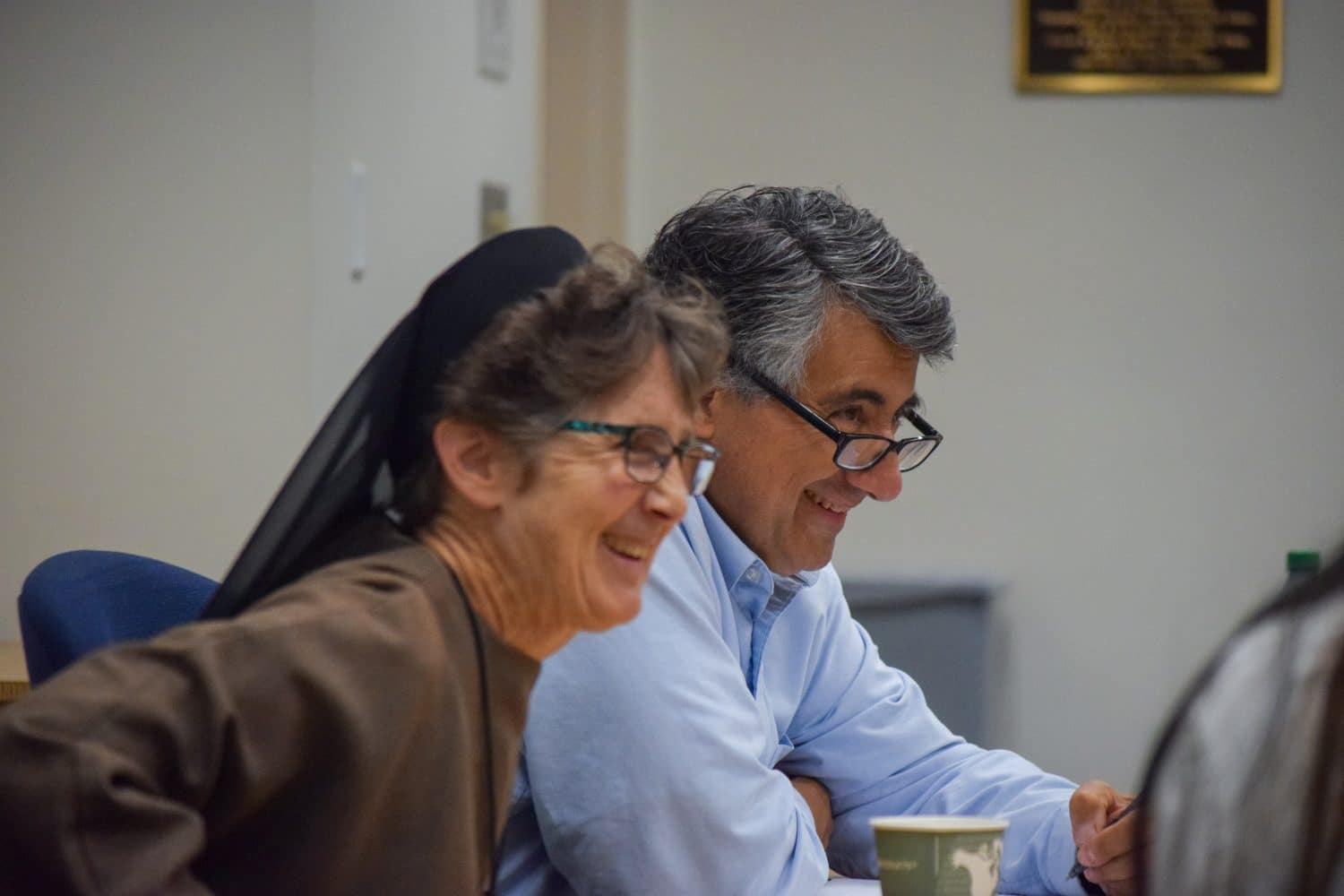
The initial cohort of In Lumine Network members had already begun, however, so Casarella followed Levergood’s example and kicked off with a big event, bringing Lumen Christi in as a cosponsor. In the summer of 2023, Casarella and his former student, Sister Damien Marie Savino, Savino, FSE, Ph.D. hosted ten graduate students at Duke for a week-long seminar: “Theology for Engineers and Scientists: Technology, Environment, and the Pursuit of Wisdom.” The seminar, underwritten by Lumen Christi’s In Lumine Grant (62372), received rave reviews from participants and garnered attention from the wider Duke and Research Triangle community about what Fons Vitae would do next.
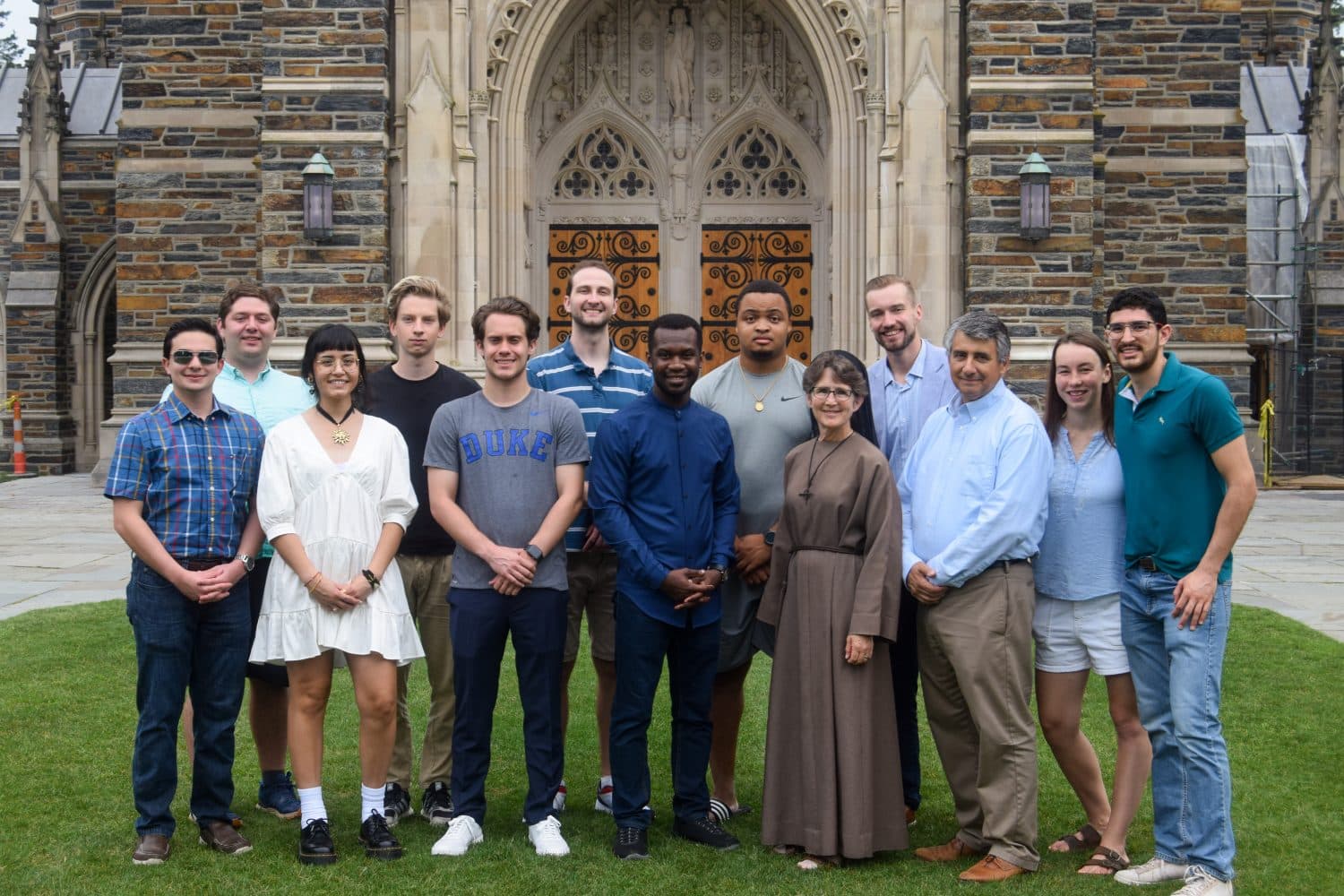
The seminar was an initial foray into ethical questions about technology, creation, and the human person, bringing in graduate students from across the country. When Fons Vitae officially became a member of Lumen Christi’s In Lumine Network, Casarella decided to begin with something more focused on the needs of Duke ‘pre-med’ undergraduates. The network gave Fons Vitae a microgrant for a pilot project: the Catholic Medical Humanities Fellowship. The first cohort of the fellowship ran for the 2025-2026 academic year, consisting of monthly meetings led by Dr. John Thorpe, an obstetrician at the University of North Carolina, and featuring other medical experts to discuss the purpose of medicine.
“We cannot just let these students wither on the vine and go into medical schools, try to make money, and climb the ladder without some teleology, without some direction in life,” Casarella said.
Fellows explored Catholic bioethics, ethical and religious directives, some nuts and bolts, and a Catholic approach
to the healing profession. “The intent was to spur them to think about the relationship between the Church and medicine before they apply to medical school, such as what is distinctively Catholic about questions in bioethics and questions related to end of life.”
The year’s capstone was a visit to Washington DC to visit the Basilica of the Immaculate Conception and attend a seminar with two professors at the John Paul II Institute for Studies of Marriage and Family. Students also met with White House officials from Health and Human Services and representatives from the Catholic Medical Association to talk about policy issues in medicine.
The program had 36 applications from highly qualified undergraduates for 12 spots. Due to the demand, they had to turn away lowerclassmen, which Casarella says is a good sign for the sustainability of the fellowship in the future. This program, Casarella explains, is an example of how Fons Vitae is trying “to shape and form the hearts and minds of people interested in Catholic intellectual traditions as they relate to a profession.” His goal is to replicate this program in other academic and professional areas.
The programming that Fons Vitae provides at Duke, like each of the member-institutes of the network across the country, exemplifies Levergood’s vision for the expansion of the effort to maintain the Catholic intellectual tradition today. “We are not trying to do a branch office of Lumen Christi that happens to be at Duke,” Casarella explains. “It’s not like McDonald’s. Thomas was far too much of the libertarian to give his blessing to something like that.”
In the spring of 2021, Casarella called up Levergood to tell him about the idea to start something at Duke and to brainstorm. At that point, Levergood had been diagnosed with cancer. Their conversation did not last long, because Levergood was weak and not up to talking much at the moment, but he loved the idea.
“My dear friend Thomas Levergood passed in August of 2021,” Casarella recounts, “which was a very sad day. I thought, naively, that Thomas would recover. I thought we’d have time to have beers to plan it out. And of course, silly me, I didn’t realize that was my last conversation with Thomas.”
Casarella carries on his friend’s legacy in the work he does to bring the Catholic intellectual tradition to Blue Devil country. Though Levergood did not live to see their first event, Casarella says he feels Levergood’s blessing on his work. Through the friendship of Thomas Levergood and the network, Casarella says, “There is a spiritual link between Lumen Christi and Fons Vitae.”
Fons Vitae’s Medical Humanities Fellowship was made possible through the Lumen Christi Institute’s grant, In Lumine Tuo: Expanding and Sustaining the Catholic Intellectual Tradition Nationwide (grant #63614) from the John Templeton Foundation and the generous support of our donors. The opinions expressed are those of the author and do not necessarily reflect the views of the John Templeton Foundation.