REGISTER BELOW
6:00 p.m. Dinner | 6:15 p.m. Discussion | 7:30 p.m. End
This event is designated for current University of Chicago undergraduate students. All registrants will be provided with a free copy of the text.
This seminar and the Nicklin Fellows are made possible by the First Analysis Institute. This seminar is co-sponsored by the Seldon Institute and is made possible through the support of In Lumine Tuo: Expanding and Sustaining the Catholic Intellectual Tradition Nationwide (grant #63614) from the John Templeton Foundation and the generous support of our donors.
Description:
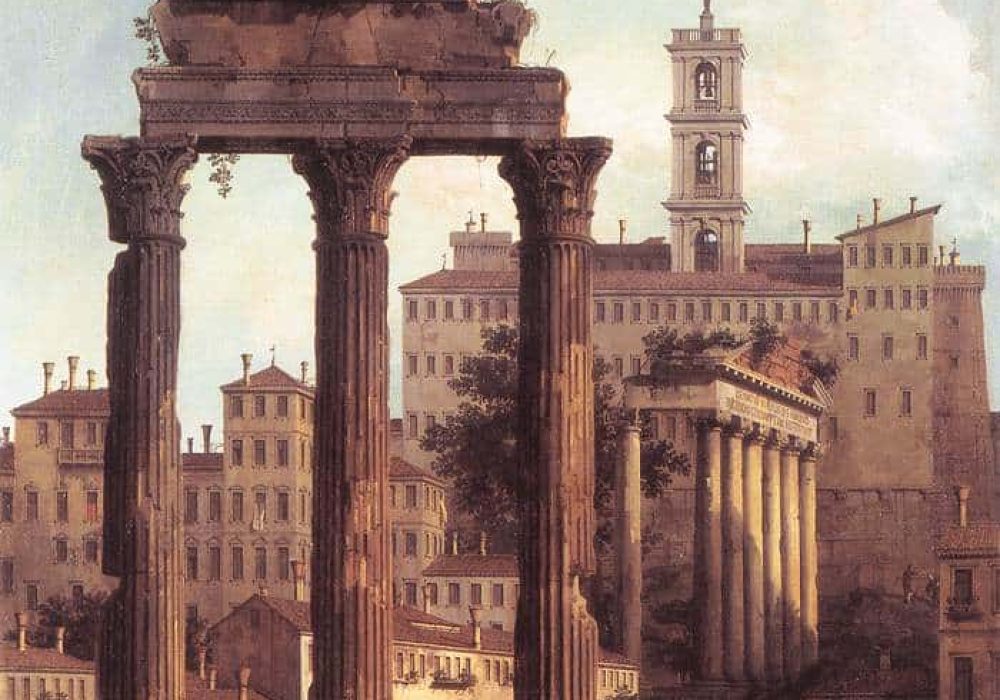
Nothing could be stranger than life in the cities of ancient Greece and Rome:
- Property is private, but its sale is forbidden
- Celibacy is illegal
- Marriage ceremonies combine ritualized force and denunciation of ancestors
- Politics is all-consuming
The more one looks at the ancient world, the odder it appears–until one realizes that ancient religion was the key to the social state.
The Ancient City is the great masterpiece of the 19th century French historian, Numa Denis Fustel de Coulanges. By turning an incisive eye towards the primary sources of Ancient Greece and Rome, supplemented by comparisons to ancient Hindu texts, Coulanges reconstructed the basis of ancient Greek and Roman society. At the root of this society was ancient religion and the domestic cult. Only by understanding ancient religion could one begin to understand the nature of ancient law, property relations, and political organization.
Coulanges traced the origin and development of the ancient city, its transformation among various social and political revolutions, and its demise. Coulanges’ new approach to old things paved the way for 20th century developments in anthropology and the sociology of religion.
Join us as we read selections of The Ancient City and discuss Fustel’s theses about the beginnings of religion, the birth of political life, and the nature of human society.
Schedule:
Each session will have about 15 pages of assigned reading. An additional 30 pages of recommended reading are suggested as well.
- Oct 15 – Week 1: The Family and the Domestic Cult
- Oct 29 – Week 2: The City
- Nov 12 – Week 3: Revolutions
Please click here for the syllabus with more detailed reading assignments. PDFs of readings for the first session can be found here.
Series Description:
Fundamental Questions Seminar
This event is part of Lumen Christi’s Fundamental Questions program, a quarterly seminar designed for undergraduate students at the University of Chicago. By fostering intellectually rigorous conversation around culturally resonant texts, we aim to allow students to experience the force of the deep existential concerns which animate our lives: “Where do my values come from? What is the good life? How can I become happy?” Our aim is not to answer such fundamental questions, but rather to equip students with the intellectual skills needed to recognize and articulate them for themselves. This group welcomes students from all religious and philosophical backgrounds because existential questions of being are of concern to all.
In addition, undergraduate students who participate in this seminar are eligible to become “Nicklin Fellows.” These fellows will have exclusive access to research and development grant funds to pursue their intellectual interests. Grants can be used to do things like the following:
- Organize a reading group
- Bring a speaker to campus
- Organize a movie night
- Develop and plan future fundamental questions seminars
- Write a paper for a journal
- And more!